


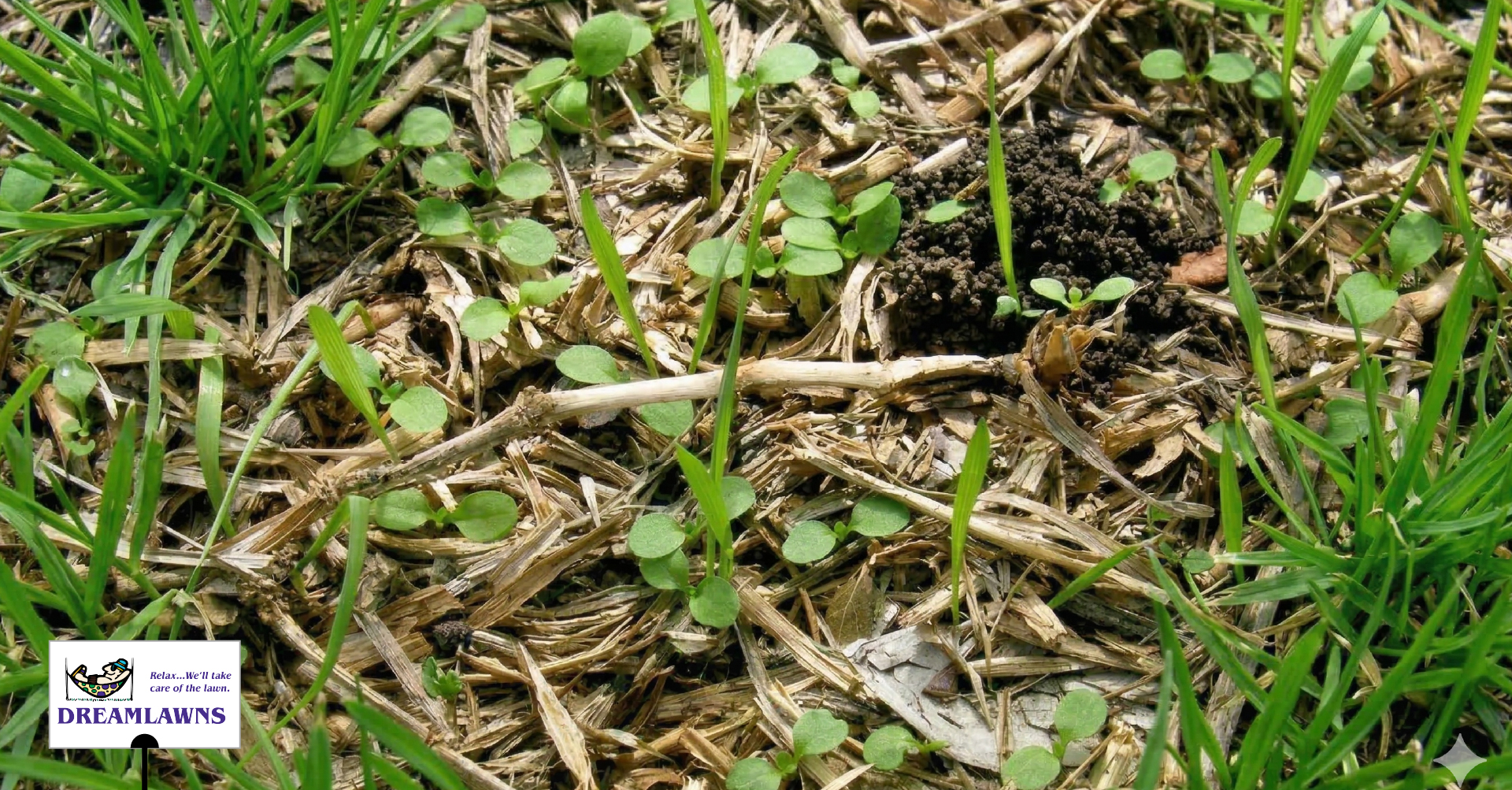
Dreamlawns Quick Cut: Weeds follow a predictable life cycle that includes germination, establishment, active growth, seed production, and dormancy. By the time weeds are visible, much of their growth has already occurred. Preventing weeds during the germination stage through properly timed treatments is more effective than reacting after they appear. Understanding the life cycle helps reduce recurring infestations and protect long-term lawn health.
Most homeowners think about weed control when they see weeds. A patch of green in winter, a burst of flowers in early spring, or broadleaf growth in summer usually triggers action. By that point, however, most of the weed’s life cycle has already taken place.
Weeds do not suddenly appear overnight. They follow predictable growth patterns tied to soil temperature, moisture, and seasonal conditions in Virginia Beach. Understanding the life cycle of a weed explains why some treatments work well, and others seem to provide only temporary relief.
The key difference between reactive lawn care and effective weed management comes down to timing. When you understand how and when weeds germinate, establish roots, produce seeds, and die off, you can interrupt the process before it creates long-term problems. Learning the stages of a weed’s life cycle helps explain why prevention often matters more than correction and why timing plays a critical role in maintaining a healthy, resilient lawn.
Stage 1: Germination
Every weed problem begins with germination. This is the stage when a seed in the soil begins to grow, triggered by the right environmental conditions. In Virginia Beach lawns, germination typically depends on soil temperature and moisture rather than the calendar date. Most weed seeds can remain dormant in the soil for months or even years. When conditions are right, they activate quickly.
Common germination triggers include:
- Soil Temperature Changes: Certain weeds germinate when the soil reaches specific temperature ranges. Many winter weeds begin growing in fall, while summer weeds activate in early spring.
- Consistent Moisture: Rainfall or irrigation provides the water necessary for seeds to sprout.
- Sunlight Exposure: Thin or bare areas in turf allow more light to reach the soil, encouraging weed seed activation.
- Disturbed Soil: Aeration, heavy traffic, or construction can bring buried weed seeds closer to the surface.
One of the most important things to understand about germination is that it happens before weeds are visible. By the time you see growth above the soil, the weed has already begun developing roots. This is why pre-emergent weed control focuses on interrupting germination. Once seeds sprout and establish roots, control becomes more complicated and less preventative. Weed prevention works best when it targets this early stage, before weeds ever appear.
Stage 2: Establishment or Seedling
After germination, a weed enters the establishment or seedling phase. This is when it begins developing a stronger root system and anchoring itself into the soil. Although growth above ground may still be small, significant development is happening below the surface.
During this stage, weeds focus on:
- Root Expansion: Roots begin spreading outward and downward to secure water and nutrients.
- Early Nutrient Competition: Even small weeds start competing with turf for available resources.
- Stability in the Soil: As roots strengthen, weeds become more difficult to remove manually.
For many lawn weeds in Virginia Beach, this stage occurs quietly during fall or early spring. By winter, weeds like henbit and chickweed are already firmly established, even if they are not yet widespread.
The establishment phase is important because it represents the last point where weeds are relatively easy to control with properly timed treatments. Once a weed is fully rooted, removing it without damaging the surrounding turf becomes more challenging.
Understanding this stage reinforces why waiting until weeds are large and visible often leads to more work and more stress on the lawn. Early intervention during establishment reduces competition and helps preserve turf density before weeds gain momentum.
Stage 3: Active Growth or Vegetative
Once a weed is established, it enters the active growth or vegetative stage. This is when it becomes highly visible and begins spreading aggressively across the lawn. For many homeowners, this is the first time the problem is noticed. During active growth, weeds focus on expanding their presence and competing directly with turf.
Common characteristics of this stage include:
- Rapid Top Growth: Weeds grow quickly above ground, often outpacing turf during cooler or transitional seasons.
- Increased Nutrient Demand: As weeds grow larger, they pull more nutrients from the soil, limiting what is available for grass.
- Moisture Competition: Established root systems draw water away from turf, especially during dry or saturated conditions.
- Surface Spread or Vertical Dominance: Some weeds, like chickweed, spread outward in dense mats. Others, like henbit, grow upright and rise above the lawn canopy.
In Virginia Beach lawns, this stage commonly occurs in late winter for cool-season (winter) weeds and late spring for summer weeds. Because turf may still be slow-growing during these periods, weeds often gain the upper hand.
Active growth is when weed infestations become most noticeable, but by this point, control typically requires more targeted intervention. Treating weeds at this stage can reduce visible growth, but it does not prevent the next generation if seed production has already begun. Understanding this phase helps explain why reactive treatments alone often lead to recurring weed problems year after year.
Stage 4: Flowering and Seed Production
Flowering and seed production mark the most critical stage in the life cycle of a weed. At this point, the weed shifts its energy from growth to reproduction, ensuring the next generation is already prepared before the current plant dies off.
In Virginia Beach lawns, many winter weeds begin flowering in late winter or early spring. Those small purple blooms from henbit or the bright green seed heads from annual bluegrass are not just cosmetic issues. They signal that the weed is actively producing seeds.
During this stage, weeds:
- Produce large quantities of seeds: A single plant can generate hundreds or even thousands of seeds.
- Disperse seeds into the surrounding soil: Wind, mowing, foot traffic, and rainfall all help spread seeds.
- Reinforce future infestations: Newly dropped seeds remain in the soil, waiting for ideal conditions to germinate.
By the time flowering occurs, much of the damage has already been done. Even if the visible plant is removed, seeds left behind can create the same problem the following season.
This stage explains why simply treating visible weeds is rarely enough. Long-term weed control requires interrupting the life cycle before seed production occurs. Once seeds enter the soil, they contribute to the ongoing weed pressure that makes infestations seem repetitive year after year.
Stage 5: Dormancy or Die-Off
The final stage of a weed’s life cycle depends on whether the weed is an annual or a perennial. While some weeds die off completely at the end of their growing season, others simply enter dormancy and return later.
For annual weeds, the visible plant dies after completing seed production. Winter weeds often fade as temperatures rise, while summer weeds decline as cooler weather arrives. At first glance, this can make it seem like the problem has resolved itself. However, seeds left behind in the soil ensure the cycle will repeat.
For perennial weeds, the plant does not fully die. Instead, the top growth may disappear while roots remain alive underground. When favorable conditions return, new growth emerges from the same root system.
This stage can create a false sense of relief. When weeds disappear naturally, homeowners may assume the lawn has recovered. In reality:
- Seeds remain in the soil, ready to germinate under the right conditions
- Perennial roots may still be alive, preparing for regrowth
- Thin or stressed turf remains vulnerable, allowing new weeds to establish
The soil often contains a seed bank made up of thousands of dormant weed seeds. These seeds can remain viable for years, waiting for proper temperature and moisture triggers. Even when visible weeds are gone, the life cycle continues beneath the surface.
Why Pre-Emergent Works (And Why Timing Is Critical)
Pre-emergent weed control works by interrupting the life cycle during the germination stage. Instead of targeting visible weeds, pre-emergent products create a protective barrier in the soil that prevents newly germinated seeds from developing properly.
This is why timing matters more than treatment strength.
For pre-emergent to be effective, it must be applied before germination begins. In Virginia Beach, that window depends on soil temperature and seasonal weather patterns rather than a specific calendar date.
Pre-emergent is most effective because it:
- Stops weeds before they become visible
- Reduces competition with turf early in the season
- Limits seed production by preventing new plants from forming
- Helps reduce long-term weed pressure over time
If applied too late, after seeds have already sprouted, pre-emergent will not eliminate established weeds. This is where many homeowners run into frustration. By the time weeds are noticeable, the germination stage has already passed.
Properly timed pre-emergent applications significantly reduce the number of weeds that make it to the establishment and active growth stages. When combined with healthy turf density, this creates a lawn that is more resilient and better able to compete naturally.
How Dreamlawns Uses Life Cycle Timing for Weed Control
At Dreamlawns, weed control is built around understanding the life cycle of a weed rather than simply reacting to visible growth. By identifying when weeds germinate, establish, flower, and produce seed in Virginia Beach, we design programs that interrupt the cycle at the most effective stage.
Our approach begins with prevention. Properly timed pre-emergent applications are scheduled based on soil temperature trends and seasonal patterns, not just calendar dates. This allows us to target weeds during the germination stage before they become visible problems.
When weeds are already present, we use turf-specific post-emergent treatments to manage active growth without compromising lawn health. These treatments are carefully selected based on turf type, weed species, and current growing conditions.
Beyond chemical control, we focus on strengthening the lawn itself. Healthy, dense turf is the best natural defense against weed establishment. By incorporating fertilization, moisture management, and seasonal adjustments into a year-round lawn care program, we help reduce the open spaces that weeds rely on.
By aligning treatments with each stage of the weed life cycle, we reduce long-term weed pressure rather than simply controlling surface growth. This strategic timing leads to healthier lawns, fewer recurring infestations, and more consistent results throughout the year.
Work With Us
Understanding the life cycle of a weed changes the way you approach lawn care. Instead of reacting to visible growth, you can focus on prevention, proper timing, and strengthening turf before problems develop.
At Dreamlawns, we help Virginia Beach homeowners take a strategic approach to weed control. By monitoring soil temperatures, seasonal trends, and turf conditions, we schedule treatments at the most effective stage of the weed life cycle. This allows us to reduce long-term weed pressure rather than simply managing surface growth.
Our year-round lawn care programs are designed to combine prevention, targeted control, and turf health management into one coordinated plan. The result is a lawn that is better protected against recurring weed infestations and more resilient throughout the growing season.
If you are ready to move beyond reactive treatments and take control of weed problems at their source, Dreamlawns is here to help. Contact us to schedule an evaluation and build a lawn care plan based on timing, prevention, and long-term results.
Dreamlawns provides superior lawn care service to Virginia Beach & Chesapeake VA residents.

