


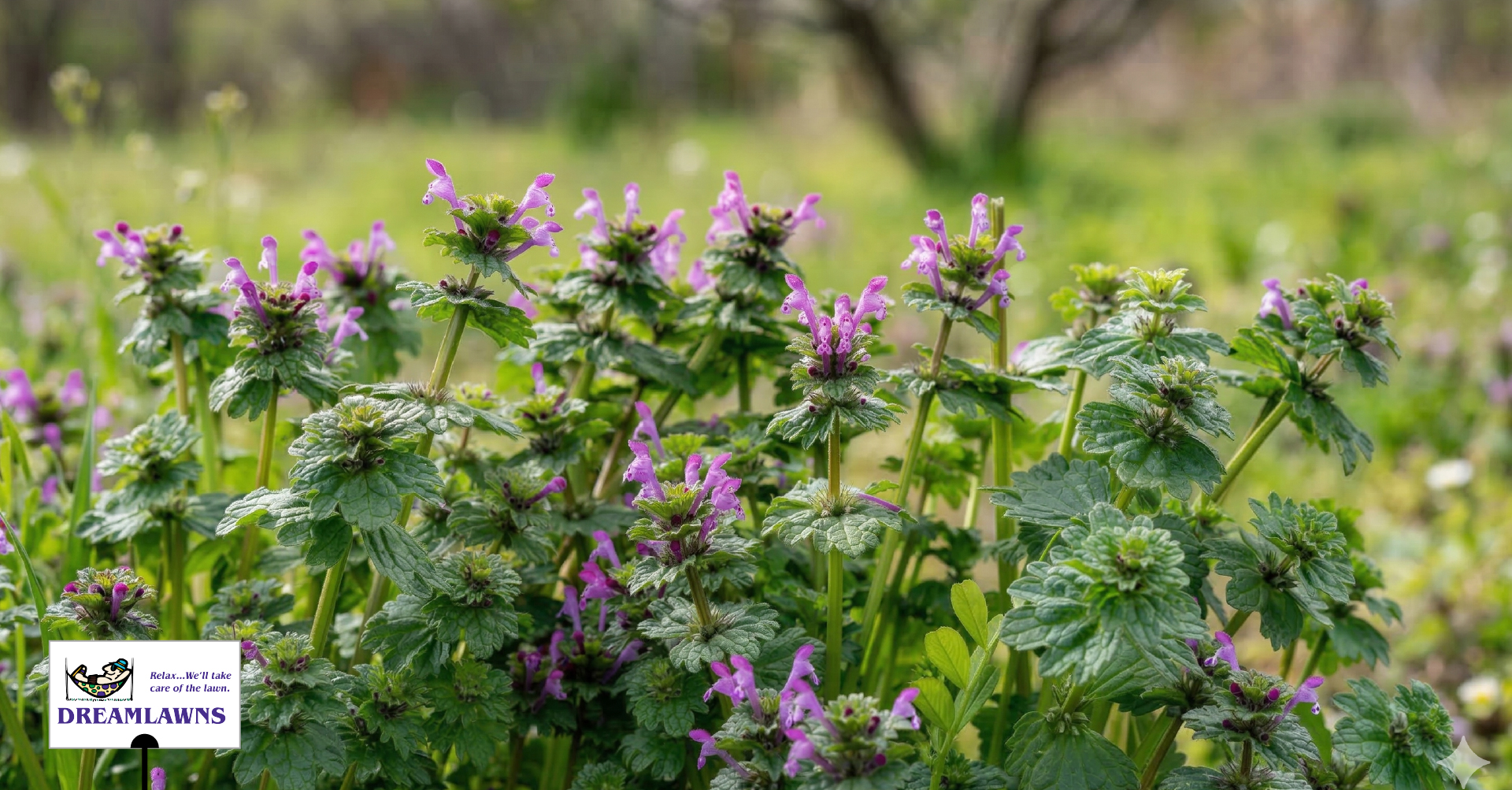
Dreamlawns Quick Cut: Henbit is a common winter weed in Virginia Beach that germinates in the fall and spreads quickly during mild, wet winters. It competes with turf, produces seeds before spring, and often leaves thin areas behind when it dies off. Proper timing, turf-specific control strategies, and year-round lawn care help reduce henbit and prevent recurring infestations.
Each winter, many Virginia Beach homeowners begin noticing small purple flowers popping up across their lawns. At first, they may seem harmless or even decorative. Within weeks, however, those flowers often spread rapidly, standing above slow-growing turf and drawing attention to thinning areas of the lawn. That weed is usually henbit.
Henbit is one of the most common winter weeds in Virginia Beach. Like many cool-season annual weeds, it begins germinating in the fall and quietly establishes itself before most homeowners realize it is present. By the time winter arrives, henbit is already rooted and ready to take advantage of mild temperatures and consistent moisture.
Because turf growth slows during winter, henbit gains a competitive advantage. It grows upright, produces noticeable purple blooms, and spreads quickly in thin or stressed areas. What seems like a sudden infestation is often the result of conditions that began developing months earlier.
Understanding why henbit appears every winter and why it spreads so easily is the first step toward managing it effectively. With the right timing and a turf-specific approach, henbit can be controlled without compromising long-term lawn health.
What Is Henbit?
Henbit is a cool-season annual weed that thrives during fall, winter, and early spring. It belongs to the mint family and is easily identified by its square stems, rounded leaves, and small purple tubular flowers that bloom in late winter.
Unlike low-growing weeds such as chickweed, henbit grows more upright. This vertical growth makes it especially noticeable in winter lawns when turf is growing slowly. The purple flowers often appear before grass begins active spring growth, making henbit stand out even more. Henbit typically follows this life cycle:
- Germinates in the fall when soil temperatures are still moderate
- Establishes roots before winter fully sets in
- Continues growing during mild winter periods
- Produces flowers and seeds in late winter to early spring
- Dies off as temperatures rise, often leaving thin or bare areas behind
Because henbit produces seeds before spring, infestations can multiply quickly from year to year if not properly managed. What appears to be a sudden outbreak is usually the result of seeds that germinated months earlier.
Why Henbit Thrives in Virginia Beach
Henbit is particularly well-suited to the climate conditions found in Virginia Beach. Unlike colder regions where prolonged freezing slows weed growth, coastal Virginia often experiences mild winters with consistent moisture. These conditions allow henbit to grow steadily while turf growth slows. Several local factors contribute to recurring henbit problems:
- Mild winter temperatures: Henbit continues growing during cool spells, especially when daytime temperatures rise above freezing.
- Frequent winter rainfall: Damp soil conditions encourage germination and root development.
- Slow-growing turf in winter: Grass is less competitive during colder months, allowing henbit to spread more easily.
- Thin or stressed lawns: Lawns weakened by summer heat, compaction, or poor fall preparation provide open space for henbit to establish.
- Missed fall prevention timing: Because henbit germinates in fall, missing the proper pre-emergent window increases the likelihood of winter infestations.
Henbit often appears most aggressively in areas with poor drainage, heavy shade, or compacted soil. These conditions reduce turf density and create ideal opportunities for winter weeds to take hold. Understanding why henbit thrives locally helps explain why it shows up year after year. In many cases, it is not just the weed itself but the surrounding lawn conditions that allow it to spread.
Why Henbit Is Hard to Control Once Established
Henbit becomes difficult to manage, not because it is invincible, but because it is usually well established before homeowners notice it. By winter, henbit has often been growing for weeks or even months beneath the surface. Several characteristics make henbit especially persistent:
- Early fall germination: Henbit begins growing in fall when soil temperatures are still warm. By the time it becomes visible in winter, it already has a developed root system.
- Rapid upright growth: Unlike low-growing weeds, henbit grows vertically, allowing it to rise above turf and spread quickly across visible areas.
- Strong anchoring roots: While not deep-rooted, henbit establishes firmly in the soil, making complete removal more difficult than it appears.
- Early seed production: Henbit produces seeds before spring turf growth begins. This allows it to spread and return the following year if not properly controlled.
- Slow winter turf competition: Grass grows more slowly in winter, limiting its ability to crowd out and suppress weed growth.
Because henbit establishes early and produces seed quickly, reactive treatments often provide short-term relief without preventing recurrence. Effective control depends on proper timing, turf type awareness, and addressing the lawn conditions that allowed henbit to establish in the first place.
How Henbit Affects Lawn Health
Henbit may look harmless at first, but when it spreads across a lawn during winter and early spring, it can weaken turf and create lasting problems that carry into the growing season. Because henbit establishes early and grows aggressively during cooler months, it competes directly with grass when turf is least able to respond. This competition limits the lawn’s ability to maintain density and prepare for spring growth. Common lawn health issues caused by henbit include:
- Nutrient competition: Henbit absorbs nutrients that would otherwise support turf recovery and root development.
- Moisture competition: In already damp winter soils, henbit increases stress by competing for available water.
- Shading and crowding: Upright growth and dense patches reduce sunlight reaching the grass below.
- Uneven spring green-up: Areas heavily impacted by henbit often lag behind when temperatures rise.
- Thin or bare spots after die-off: As henbit completes its life cycle in late spring, it leaves exposed areas that can quickly become targets for summer weeds.
When henbit dies off, many homeowners assume the problem has resolved itself. In reality, the weakened turf and open soil left behind often create conditions for new weed pressure later in the year. Managing henbit early helps protect turf density, improve spring recovery, and reduce the likelihood of recurring seasonal weed issues.
Henbit Control for Fescue vs. Warm-Season Lawns
Effective henbit control depends on understanding your lawn’s turf type. In Virginia Beach, most lawns are either cool-season fescue or warm-season grasses such as Bermuda or Zoysia. Each requires a different winter strategy.
Fescue Lawns
Fescue remains active during winter, which means henbit control must protect the turf while targeting the weed. For fescue lawns, henbit management typically includes:
- Selective winter weed suppression that controls henbit without damaging actively growing grass
- Maintaining proper mowing height to encourage turf density and competition
- Managing moisture levels to reduce the damp conditions henbit prefers
Pre-emergent herbicides are generally not used during winter in fescue lawns because they can interfere with turf growth. Instead, targeted treatments and healthy turf management help reduce henbit pressure while preserving lawn strength.
Warm-Season Lawns
Warm-season grasses go dormant in winter, making henbit more visible and more aggressive in comparison. For warm-season lawns, control relies heavily on prevention:
- Properly timed fall pre-emergent applications to prevent henbit from germinating
- Monitoring during winter for breakthrough growth
- Spot treatments when necessary to limit spread
Once henbit is fully established in dormant turf, control options become more limited. That is why correct timing in fall is critical for preventing recurring winter infestations.
Matching henbit control strategies to turf type ensures treatments are effective while protecting long-term lawn health. Prevention and early intervention remain the most reliable approaches for reducing henbit year after year.
How Dreamlawns Manages Henbit and Other Winter Weeds
At Dreamlawns, henbit control is part of a broader winter weed management strategy designed specifically for Virginia Beach lawns. Rather than treating visible weeds as isolated problems, we focus on timing, turf type, and the underlying conditions that allow henbit to spread.
Our process begins with evaluating the lawn’s overall health. We assess turf density, soil moisture, drainage patterns, compaction levels, and shaded areas. Henbit often thrives where turf is thin or stressed, so identifying these contributing factors is key to long-term control.
For fescue lawns, we apply targeted winter weed suppression treatments that reduce henbit and other cool-season weeds without disrupting active turf growth. These treatments are carefully timed to protect the lawn while limiting weed pressure during winter and early spring.
For warm-season lawns, prevention remains the most effective strategy. Properly timed fall pre-emergent applications help prevent henbit and other winter weeds from germinating. During winter, we monitor lawns for breakthrough growth and make adjustments when necessary.
Beyond weed control, we also address common conditions that contribute to recurring infestations, including excess moisture, poor drainage, compacted soil, and weak turf density. By integrating winter weed management into a year-round lawn care program, we help strengthen turf so it can compete naturally and reduce future weed pressure. Our goal is not simply to eliminate henbit for the current season, but to improve overall lawn health and reduce the likelihood of repeat problems year after year.
Protect Your Lawn From Henbit and Other Winter Weeds
Henbit may seem like a minor winter nuisance at first, but left unmanaged, it can weaken turf and create ongoing lawn issues that extend well into spring. Because henbit often establishes months before it becomes visible, effective control depends on timing and a clear understanding of your lawn’s specific needs.
At Dreamlawns, we help Virginia Beach homeowners take a proactive approach to henbit and other winter weeds. Our team evaluates turf type, soil conditions, moisture levels, and seasonal stress factors to determine why weeds are spreading and how to control them without compromising lawn health.
By incorporating winter weed management into a year-round lawn care program, we help reduce recurring infestations, strengthen turf density, and support a smoother spring transition. Instead of relying on short-term fixes, we focus on long-term lawn health and consistent results.
If henbit is taking over your lawn this winter, Dreamlawns is here to help. Contact us today to schedule an evaluation and build a plan that keeps your lawn strong, resilient, and better protected against seasonal weed pressure.
Dreamlawns provides superior lawn care service to Virginia Beach & Chesapeake VA residents.

