


Dreamlawns Quick Cut: Soil compaction restricts oxygen, water, and nutrient movement in the soil, leading to shallow roots, poor drainage, and recurring lawn problems. Compacted soil weakens turf and increases weed pressure. Core aeration relieves compaction by restoring pore space and supporting deeper root growth. Addressing soil health helps create stronger, more resilient lawns year after year.
Why Some Lawns Never Fully Recover
Have you ever fertilized your lawn, adjusted your watering, treated weeds, and still felt like your grass never truly thrives? For many Virginia Beach homeowners, recurring lawn problems are not caused by the grass itself. The issue often lies beneath the surface.
Soil compaction is one of the most common and overlooked reasons lawns struggle year after year. It develops gradually, making it easy to miss. Over time, soil particles become pressed tightly together, restricting the movement of air, water, and nutrients. While the surface may look fine, the root system underneath may be under constant stress.
Because soil compaction is not immediately visible, it is frequently misdiagnosed. Homeowners may assume they need more fertilizer, different grass seed, or stronger weed control. In reality, the problem may be that the lawn’s roots simply do not have the space or oxygen needed to grow properly.
Understanding soil compaction is the first step toward breaking the cycle of recurring lawn issues. When you address the health of the soil, you create a stronger foundation for everything else, from fertilization and weed control to drainage and long-term turf resilience.
What Is Soil Compaction?
Soil compaction occurs when soil particles are pressed tightly together, reducing the space between them. Healthy soil contains small air pockets, known as pore space, that allow oxygen, water, and nutrients to move freely through the ground. When soil becomes compacted, those air pockets shrink or disappear.
Without adequate pore space, the soil becomes dense and restrictive. Grass roots struggle to penetrate deeply, and essential resources cannot move efficiently through the root zone. Compacted soil typically leads to:
- Reduced oxygen in the root zone: Grass roots need oxygen to function properly. Compaction limits airflow and stresses the plant.
- Poor water infiltration: Instead of soaking into the soil, water may pool on the surface or run off.
- Restricted root growth: Roots remain shallow because they cannot push through dense soil.
- Limited nutrient absorption: Even when fertilizer is applied, compacted soil can prevent nutrients from reaching the roots effectively.
In Virginia Beach lawns, soil compaction often builds slowly over time. It may not be obvious until turf begins showing signs of stress, such as thinning, uneven growth, or persistent weed pressure.
Understanding what soil compaction is makes it easier to see how it affects every aspect of lawn health. When the soil becomes dense and restricted, the entire lawn struggles from the ground up.
What Causes Soil Compaction in Virginia Beach?
Soil compaction does not happen overnight. In Virginia Beach lawns, it typically develops gradually due to a combination of soil composition, weather patterns, and everyday activity. Coastal Virginia soils often contain clay components that naturally hold moisture. While this can be beneficial during dry periods, clay-heavy soils are more prone to compaction when pressure is applied, especially when wet. Several common factors contribute to compacted soil in Virginia Beach lawns:
- Frequent rainfall: Wet soil is more vulnerable to compression from foot traffic and equipment.
- Heavy clay content in coastal soils: Clay particles are small and pack tightly together, reducing pore space.
- Foot traffic from pets, children, and gatherings: Repeated walking over the same areas compresses the soil over time.
- Parking or driving on turf: Even occasional vehicle traffic can significantly compact soil.
- Construction and landscaping equipment: Heavy machinery used during home improvements can compress soil deeply.
- Mowing when the lawn is wet: Lawn equipment adds weight, especially on saturated soil.
Over time, these pressures reduce the natural structure of the soil. What begins as minor compaction can gradually lead to widespread root restriction and drainage problems.
Because many of these factors are part of normal home life, soil compaction is extremely common. The key is recognizing when it begins to impact turf performance so corrective action can be taken before long-term damage occurs.
Signs Your Lawn Has Compacted Soil
Because soil compaction happens below the surface, many homeowners do not recognize it until visible lawn problems begin appearing. While compacted soil cannot be seen directly, it produces predictable symptoms. If your Virginia Beach lawn struggles year after year, compacted soil may be contributing to the problem. Common signs of soil compaction include:
- Water pooling after rain: Instead of soaking into the soil, water sits on the surface or runs off.
- Thin turf despite fertilization: Grass does not thicken even after proper nutrient applications.
- Shallow root systems: Grass pulls up easily because its roots cannot grow deeply.
- Hard soil when probed: If it is difficult to push a screwdriver or soil probe into the ground, compaction may be present.
- Uneven growth patterns: Some areas struggle while others appear healthier.
- Increased weed pressure: Weeds often take advantage of stressed turf and compacted soil conditions.
Many homeowners attempt to correct these symptoms with more fertilizer or additional watering. However, if the underlying issue is compacted soil, those treatments may only provide temporary improvement. Recognizing these signs early helps prevent recurring lawn frustration and supports more effective long-term solutions.
How Soil Compaction Affects Root Growth
Healthy lawns depend on strong, deep root systems. Roots anchor the grass, absorb nutrients, and pull moisture from deeper layers of soil. When soil becomes compacted, root development is restricted, and the entire lawn begins to suffer.
Roots naturally grow where oxygen and space are available. In compacted soil, those conditions are limited. Instead of growing downward, roots often remain shallow and confined to the upper few inches of soil. Compacted soil leads to:
- Shallow root systems: Grass cannot anchor deeply, making it more vulnerable to stress.
- Reduced drought tolerance: Shallow roots dry out quickly during warm or windy conditions.
- Lower nutrient efficiency: Fertilizer applied to the lawn may not reach the root zone effectively.
- Increased stress during seasonal transitions: Lawns with weak roots struggle more during winter and summer extremes.
When roots cannot expand freely, turf becomes dependent on frequent watering and additional inputs. Even with proper lawn care, compacted soil prevents grass from reaching its full potential.
Over time, restricted root growth creates a cycle of recurring problems. The lawn appears thin, weeds begin filling open areas, and homeowners attempt to correct the symptoms without addressing the underlying soil structure. Improving soil conditions allows roots to grow deeper and stronger, which naturally improves resilience, color, and overall lawn performance.
Why Compaction Makes Weed Problems Worse
Compacted soil does not just weaken turf. It creates ideal conditions for weeds to thrive. When grass struggles to grow deeply and densely, weeds gain a competitive advantage.
Healthy turf is the best natural defense against weeds. Thick grass blocks sunlight from reaching the soil and reduces open space where weed seeds can germinate. When soil is compacted and root systems are shallow, turf density declines, and those protective barriers weaken. Compacted soil contributes to weed pressure in several ways:
- Thin turf creates openings: Bare or weak areas allow sunlight to reach dormant weed seeds.
- Poor drainage favors certain weeds: Many weeds tolerate damp or compacted conditions better than turfgrass.
- Shallow roots limit competition: Grass cannot outcompete aggressive weeds for nutrients and moisture.
- Recurring seasonal stress weakens turf: Each year, stressed grass becomes less resilient, increasing long-term weed pressure.
This is why some lawns experience the same weed problems year after year. Even when weeds are treated, the underlying compacted soil continues to restrict turf growth, leaving the lawn vulnerable to new infestations.
Addressing soil compaction helps restore turf density and reduces the environmental advantages that weeds rely on. When roots grow deeper and stronger, grass naturally becomes more competitive and resistant to invasion.
The Solution: Lawn Aeration Explained
The most effective way to relieve soil compaction is through lawn aeration. Aeration reduces soil density by creating openings that allow air, water, and nutrients to move more freely into the root zone. There are two common types of aeration, but they are not equally effective.
Core Aeration
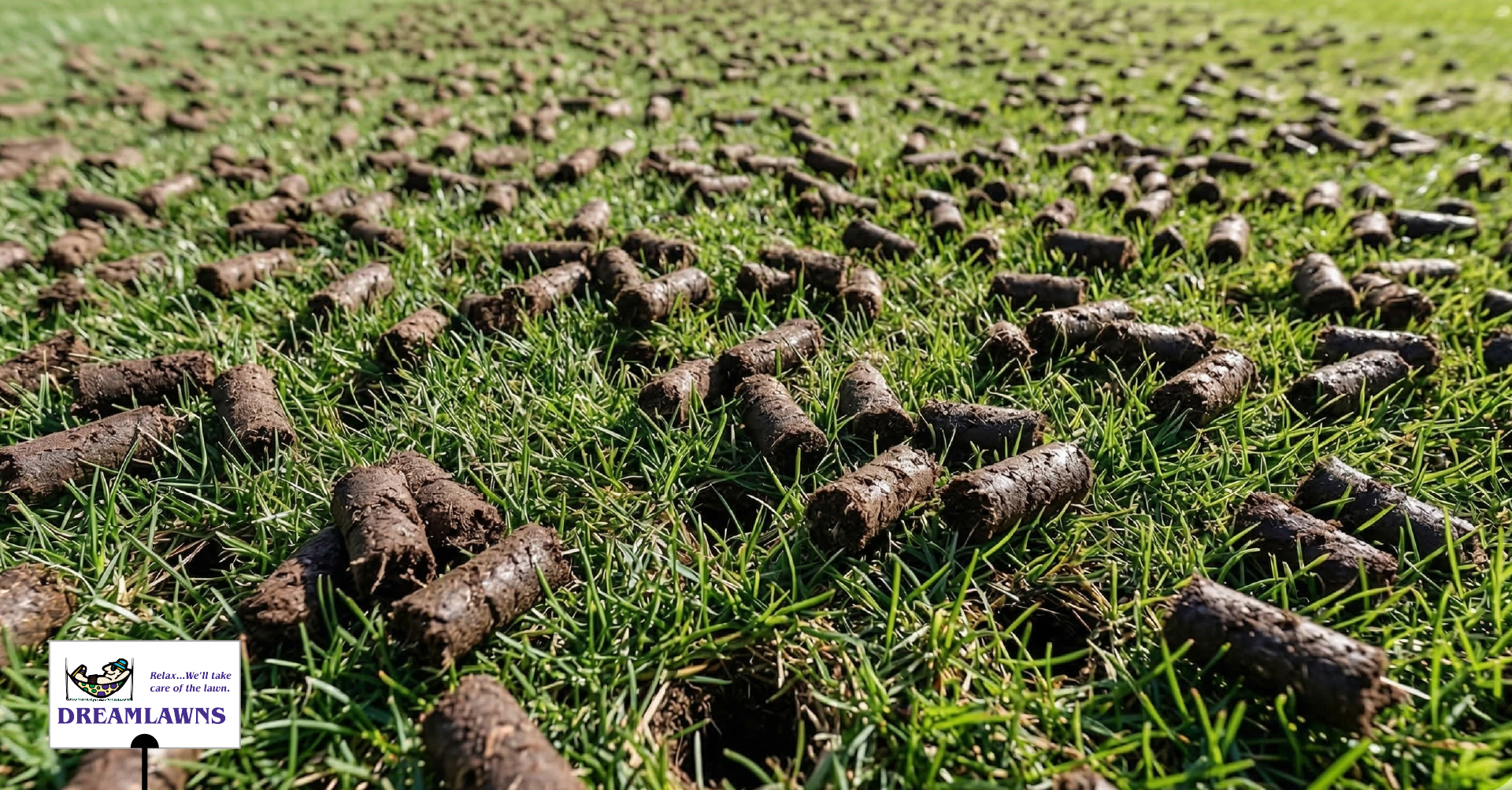
Core aeration removes small plugs of soil from the lawn, leaving open holes behind. These openings:
- Relieve pressure in compacted soil
- Improve oxygen flow to roots
- Enhance water infiltration
- Encourage deeper root growth
- Support better nutrient absorption
Core aeration physically removes soil, which creates lasting space for root expansion and soil improvement.
Spike Aeration
Spike aeration uses solid tines to poke holes in the ground without removing soil. While it may temporarily improve surface airflow, it can sometimes increase compaction around the edges of the holes, especially in clay-heavy soils common in Virginia Beach.
For long-term compaction relief, core aeration is generally the more effective solution.
By loosening dense soil and restoring pore space, aeration allows turf roots to grow deeper and stronger. This strengthens the lawn’s ability to withstand stress, resist weeds, and recover more effectively during seasonal transitions.
When Is the Best Time to Aerate in Virginia Beach?
Timing is critical when it comes to lawn aeration. Aerating at the right time allows turf to recover quickly and take full advantage of improved soil conditions. In Virginia Beach, the ideal aeration window depends on your turf type.
For Fescue Lawns
Cool-season fescue lawns benefit most from aeration in:
- Early fall
- Early spring, when turf is actively growing but not under heat stress
Fall is typically the preferred time because fescue is entering a strong growth period. Aeration during this window encourages deeper root development before winter and supports improved performance the following year.
For Warm-Season Lawns
Warm-season grasses such as Bermuda and Zoysia should be aerated during late spring to early summer, once the grass is fully green and actively growing.
Aerating too early, before warm-season turf has fully emerged from dormancy, can delay recovery. Performing aeration during peak growth allows the lawn to fill in quickly and take advantage of loosened soil.
Soil Moisture Matters
Regardless of turf type, soil moisture conditions are important. The soil should be moist but not saturated. Aerating overly wet soil can increase compaction, while extremely dry soil may resist penetration.
Properly timed aeration improves root development, enhances fertilizer efficiency, and reduces long-term stress. Matching aeration timing to turf type ensures the lawn recovers quickly and benefits fully from compaction relief.
How Dreamlawns Addresses Soil Compaction
At Dreamlawns, soil compaction is never treated as a surface-level issue. Because compacted soil affects root growth, nutrient uptake, drainage, and weed pressure, our approach focuses on improving the foundation of the lawn rather than simply correcting visible symptoms.
We begin by evaluating the lawn’s overall condition. This includes assessing turf density, drainage patterns, high-traffic areas, and signs of shallow root growth. Compaction often develops gradually, so identifying problem areas early helps prevent long-term stress.
When aeration is needed, we use core aeration to relieve pressure in the soil and restore healthy pore space. By removing small plugs of soil, we create openings that allow oxygen, water, and nutrients to reach deeper into the root zone.
Our soil-focused strategy supports:
- Stronger, deeper root development
- Improved fertilizer efficiency
- Better drainage and reduced pooling
- Increased turf density
- Reduced long-term weed pressure
Soil compaction is rarely an isolated problem. It often connects to recurring weed issues, uneven growth, and seasonal stress. By incorporating aeration and soil improvement into a year-round lawn care program, we help Virginia Beach homeowners break the cycle of repeated lawn struggles.
Work With Us
If your lawn struggles year after year despite proper fertilization and weed control, the issue may be beneath the surface. Soil compaction often limits root growth and prevents turf from reaching its full potential.
At Dreamlawns, we help Virginia Beach homeowners identify and address compacted soil before it leads to recurring lawn problems. Through proper evaluation, strategic core aeration, and year-round lawn care planning, we improve soil structure and strengthen turf from the ground up.
By focusing on soil health, we help reduce weed pressure, improve drainage, and promote deeper root development. The result is a lawn that performs more consistently and requires fewer corrective treatments over time.
If you are ready to improve your lawn’s foundation and break the cycle of recurring struggles, Dreamlawns is here to help. Contact us today to schedule an evaluation and build a lawn care plan designed for long-term success.
Dreamlawns provides superior lawn care service to Virginia Beach & Chesapeake VA residents.

