


Tall fescue is the easiest turfgrass to establish; it is green over winter and generally makes the most attractive lawn in our area. It can be a rather high-maintenance turf. It is very vulnerable to heat, drought, disease, damaging insects, low mowing, traffic & pets. You’ll lose about 1/3 of the density of your fescue in July & August. Fescue does not expand or fill in damage, so it is important to protect your lawn from damage and replenish lost density through yearly aeration & seeding.
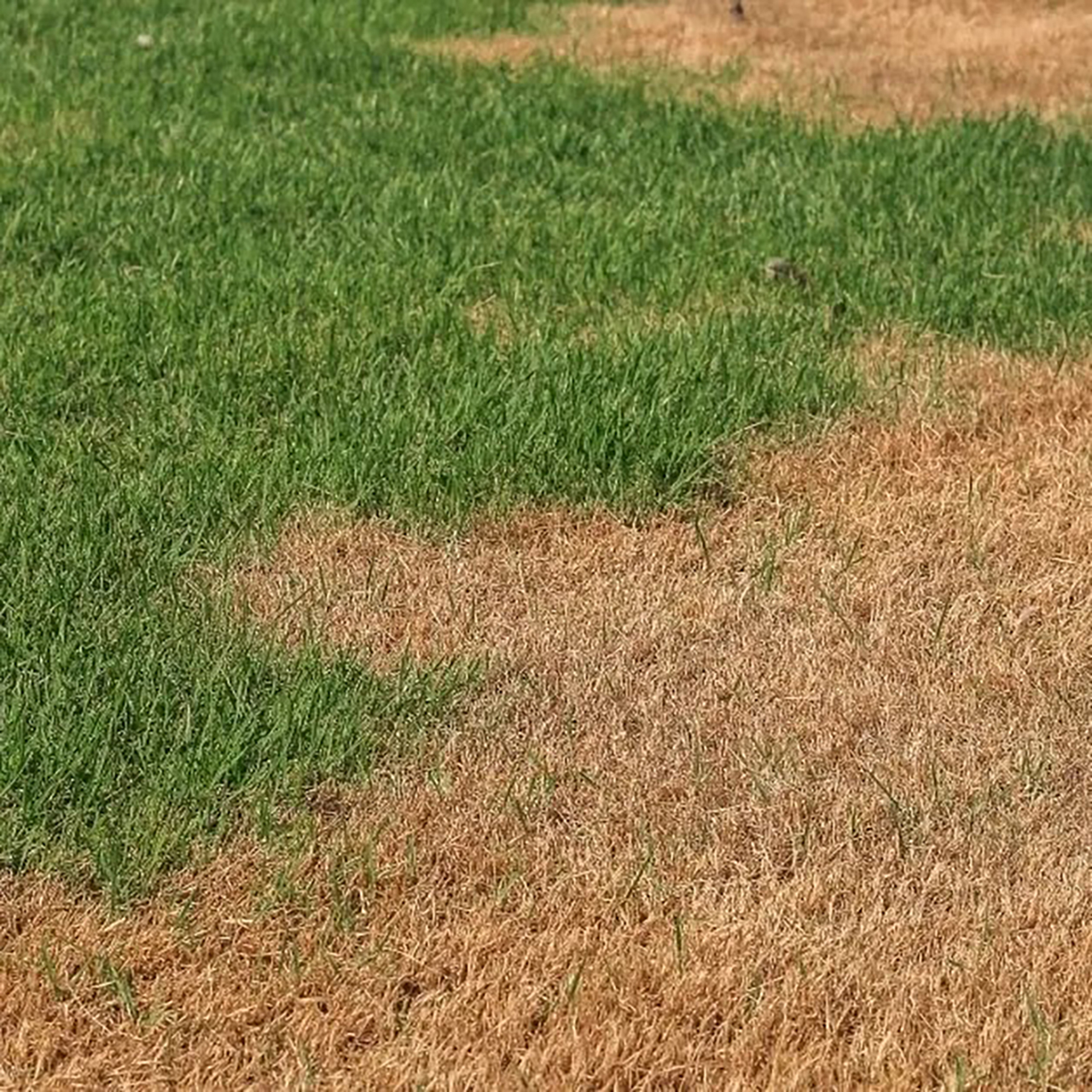
Heat Stress
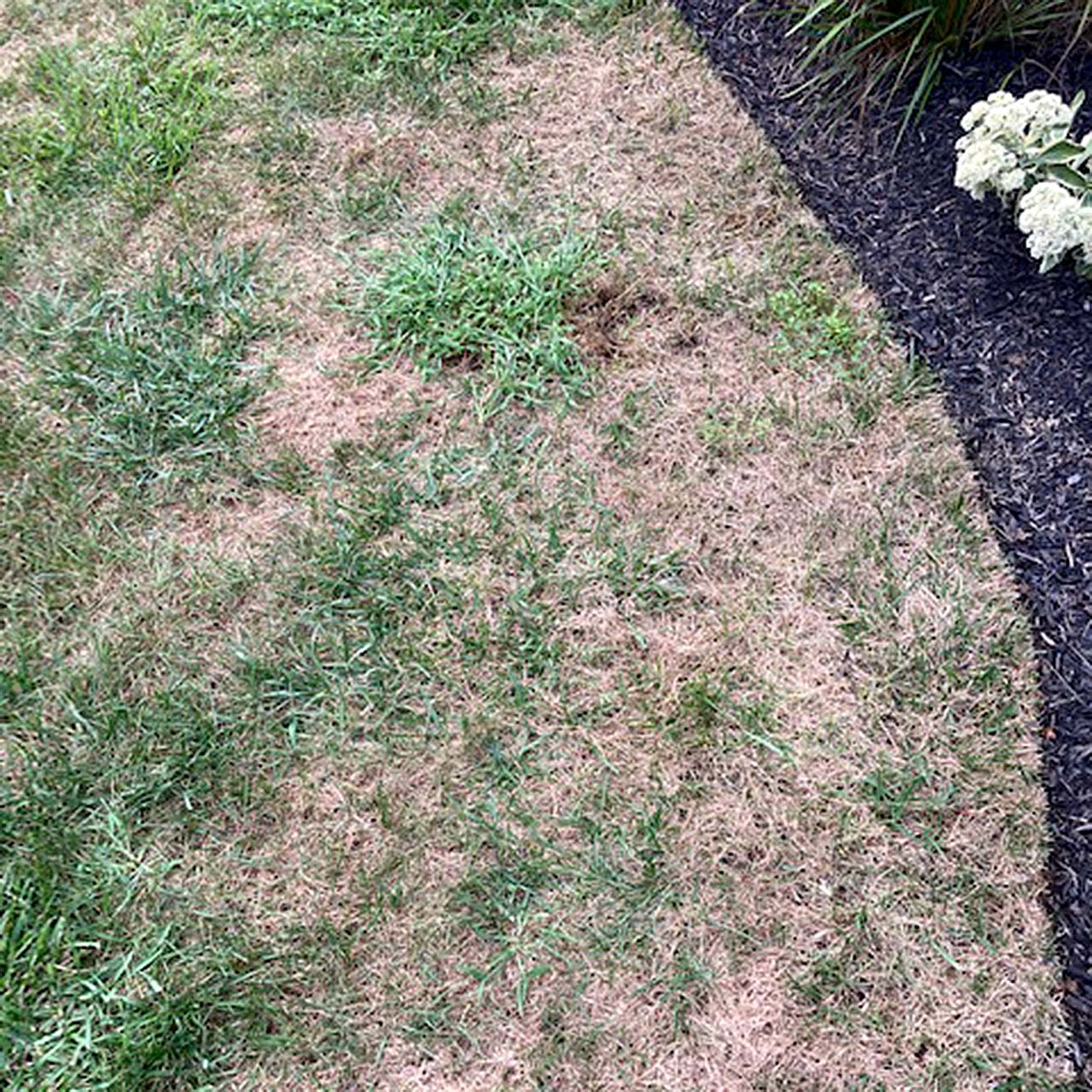
Turf Damaging Insects – Fall Armyworms
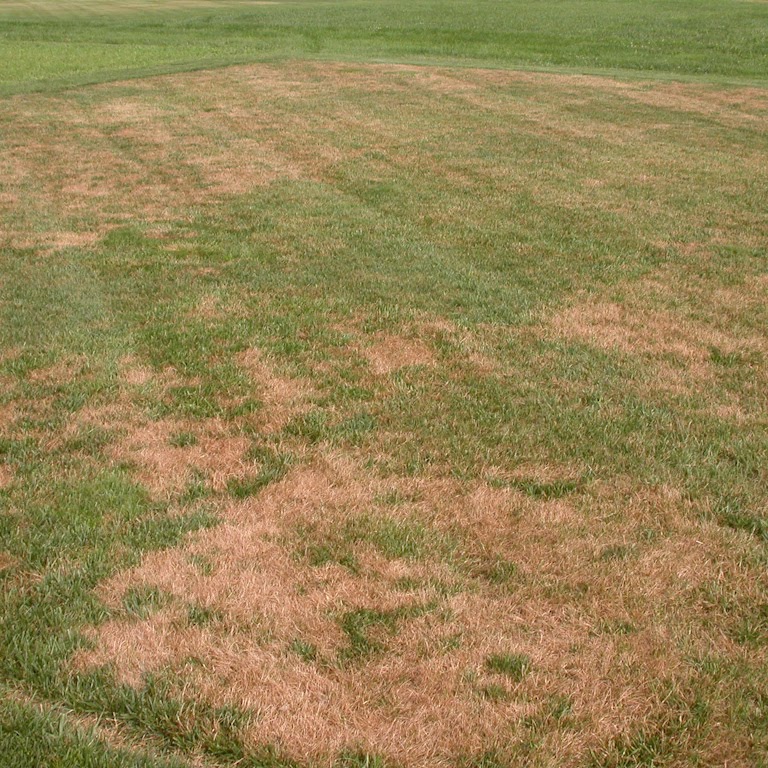
Lawn Disease – Brown Patch
It can be difficult to differentiate between types of damage, so if you see any browning, yellowing, or matted dying patches, please call us right away.
Often, customers will assume that a brown lawn just needs more water and inadvertently spread disease or give damaging insects the time that they need to wreck the lawn. Sometimes these lawns must be reestablished, which is a costly process, so please don’t hesitate to let us know if something doesn’t look right!
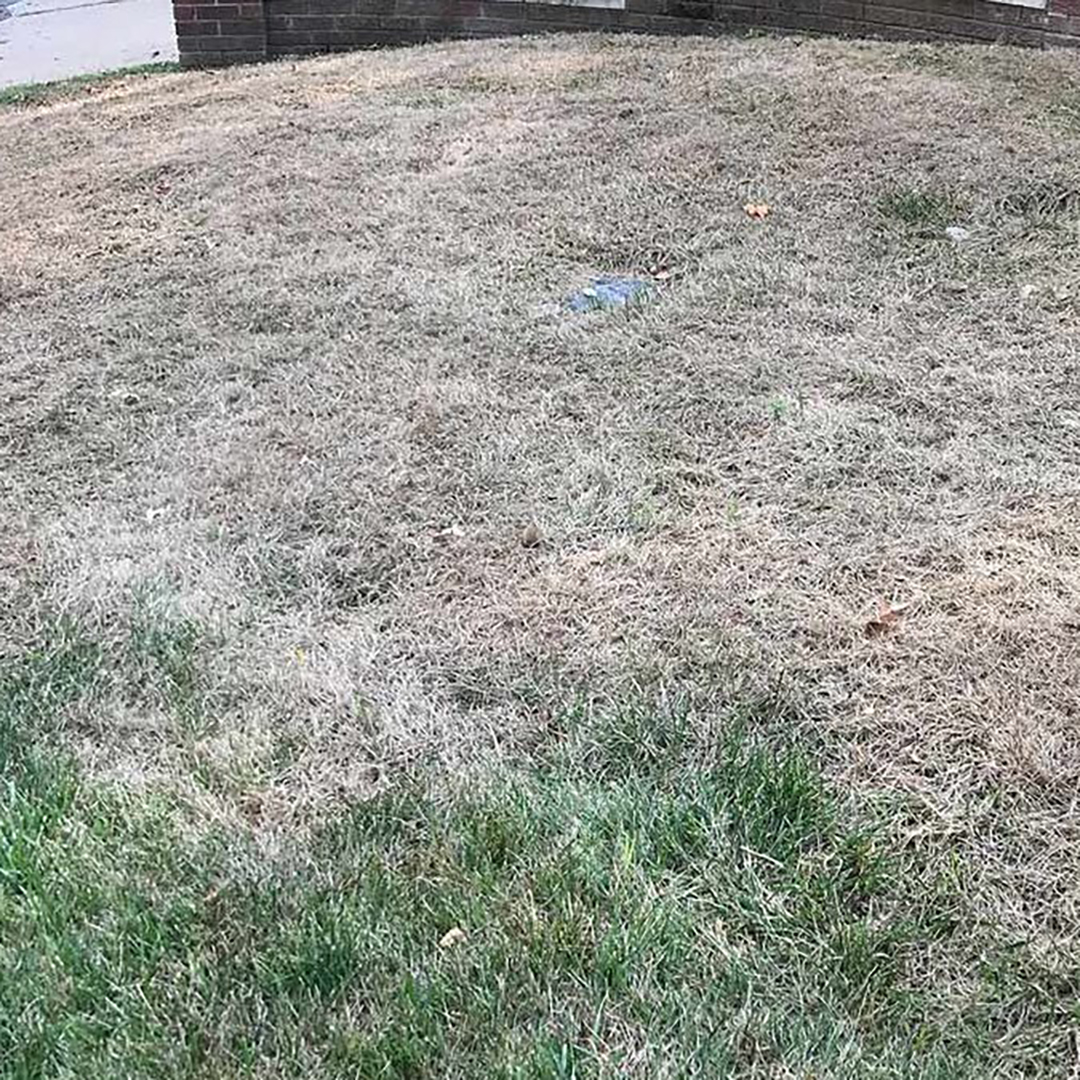
Fall Armyworm Damage
Grub Damage
Turf-damaging insects can damage a lawn much faster than most other threats: It is not uncommon for Fall Armyworms or Chinch Bugs to decimate a lawn in a day or two. Chinch Bugs target mostly St. Augustine, while most other insects will target any available turf.
Customers without this service should call asap if they see any of these insects or fast-moving damage on the lawn. We’ll be out to check promptly, but it can take a couple of days.
Fescue Lawns usually will not recover without seeding.
Most Summer Lawns will recover from this damage, but recovery may take a few years.
Fall Armyworm Damage
Grub Damage
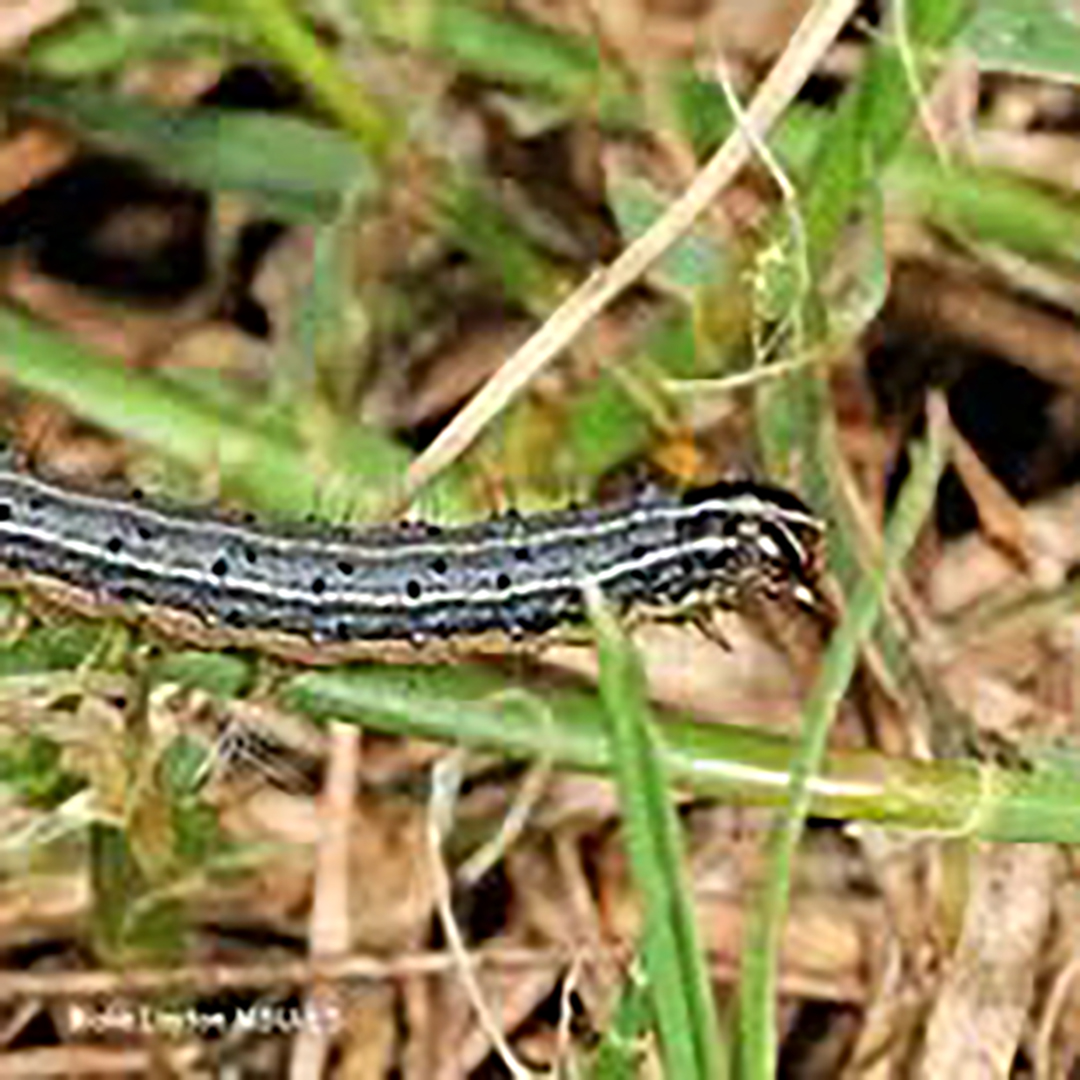
Fall Armyworm Caterpillar
Fall Armyworms Damage
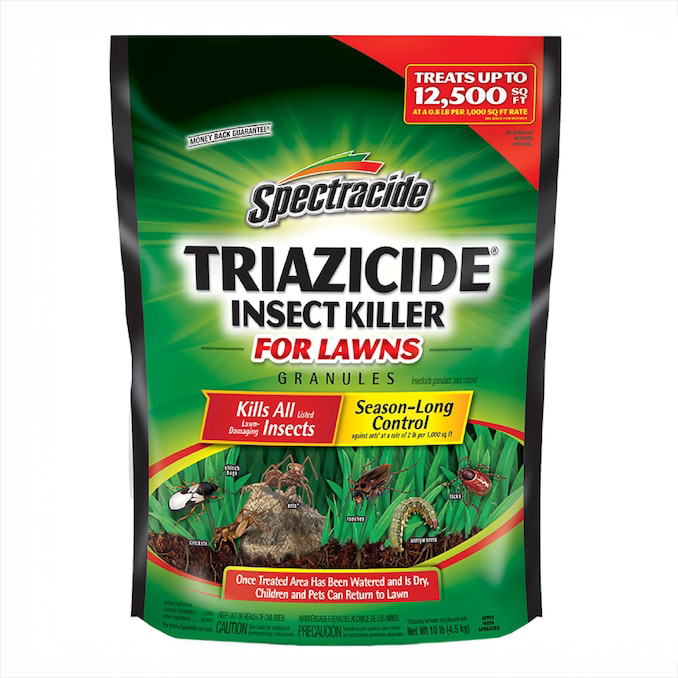
Several DIY options exist for damaging insects
These turf-damaging insects do not overwinter in Virginia.
They typically arrive in our region in late summer to early fall.
Fall armyworm moths are often carried on storms that come up from the southern US.
Fall armyworm caterpillars can feed nonstop and cause rapid, catastrophic damage to all turf types.
It is best to treat preventively with a long-lasting insecticide rather than wait until damage is observed. We offer both a standalone 2-application plan as well as a 5-round plan that includes fungal disease control.
Once they are observed, prompt action must be taken to prevent damage. In severe infestations, a lawn can be lost in less than 24 hours. We may not be able to react fast enough to save your lawn if you wait for them to appear.
If we are not treating preventatively, we suggest keeping a contact insecticide on hand from August through October and applying it if you have reason to suspect these insects are present. Call us after the application.
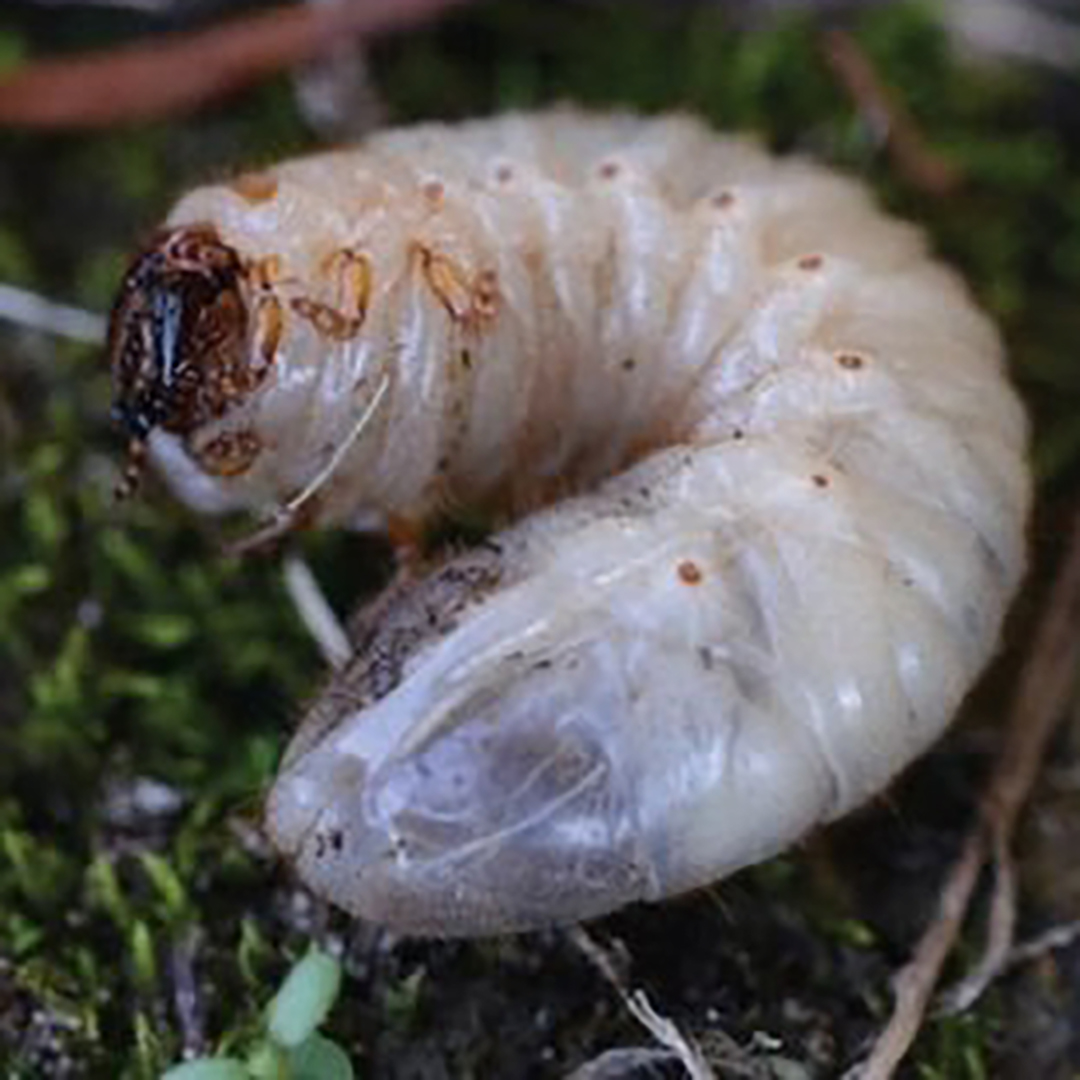
White Grub
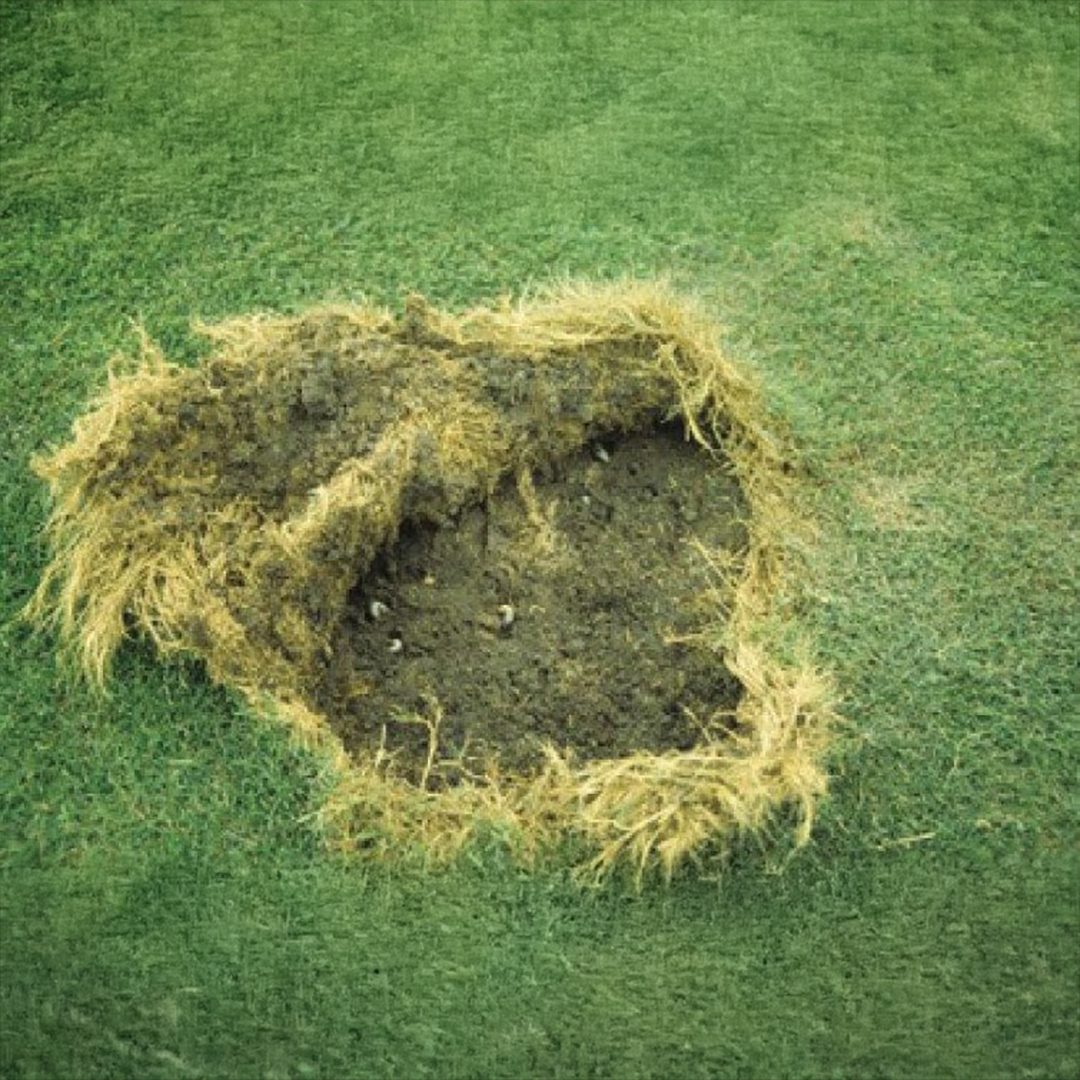
Grub Damage
White grubs are the larval form of several different insect species, including Japanese beetle, Masked chafer, Green June beetle, May / June beetle, Asiatic garden beetle, and Black turfgrass ataenius.
Grub damage is most likely in late summer and early fall as grubs are larger and closer to the surface at that time.
Grub damage usually starts with irregular brown patches and can be mistaken for fungal disease.
Affected turf often becomes loose, able to be pulled up with minimal effort, as the grubs have eaten away the root system.
Often, high grub populations are accompanied by increased animal activity, such as skunks or birds digging for grubs.
Mole activity is NOT generally a sign of high grub populations. Treating grubs will NOT reduce mole populations.
Grub damage is somewhat uncommon. In healthy turf, grub populations must reach a threshold of 10 or more grubs per square foot for most species before damage occurs.
White Grub
Grub Damage
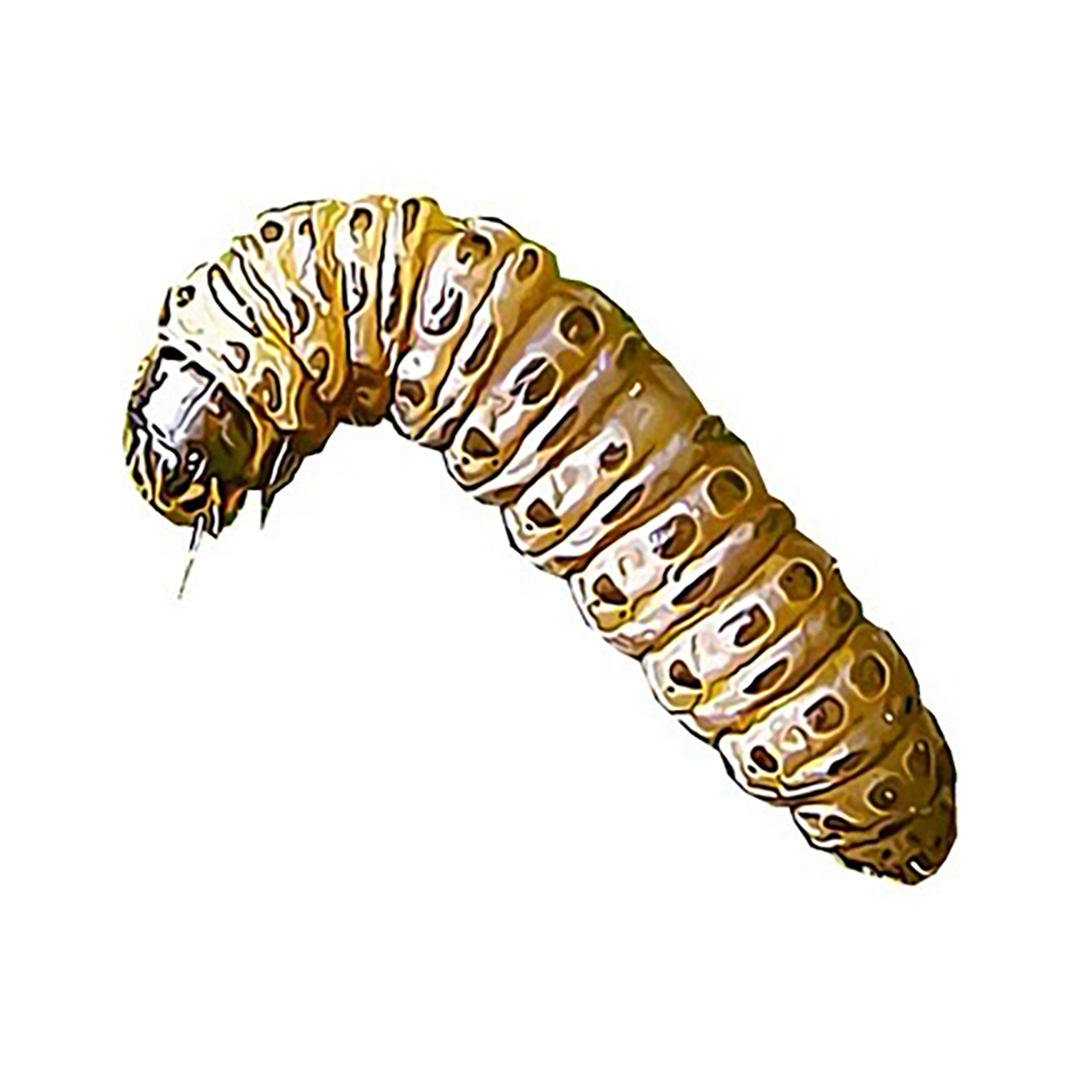
Sod Webworm
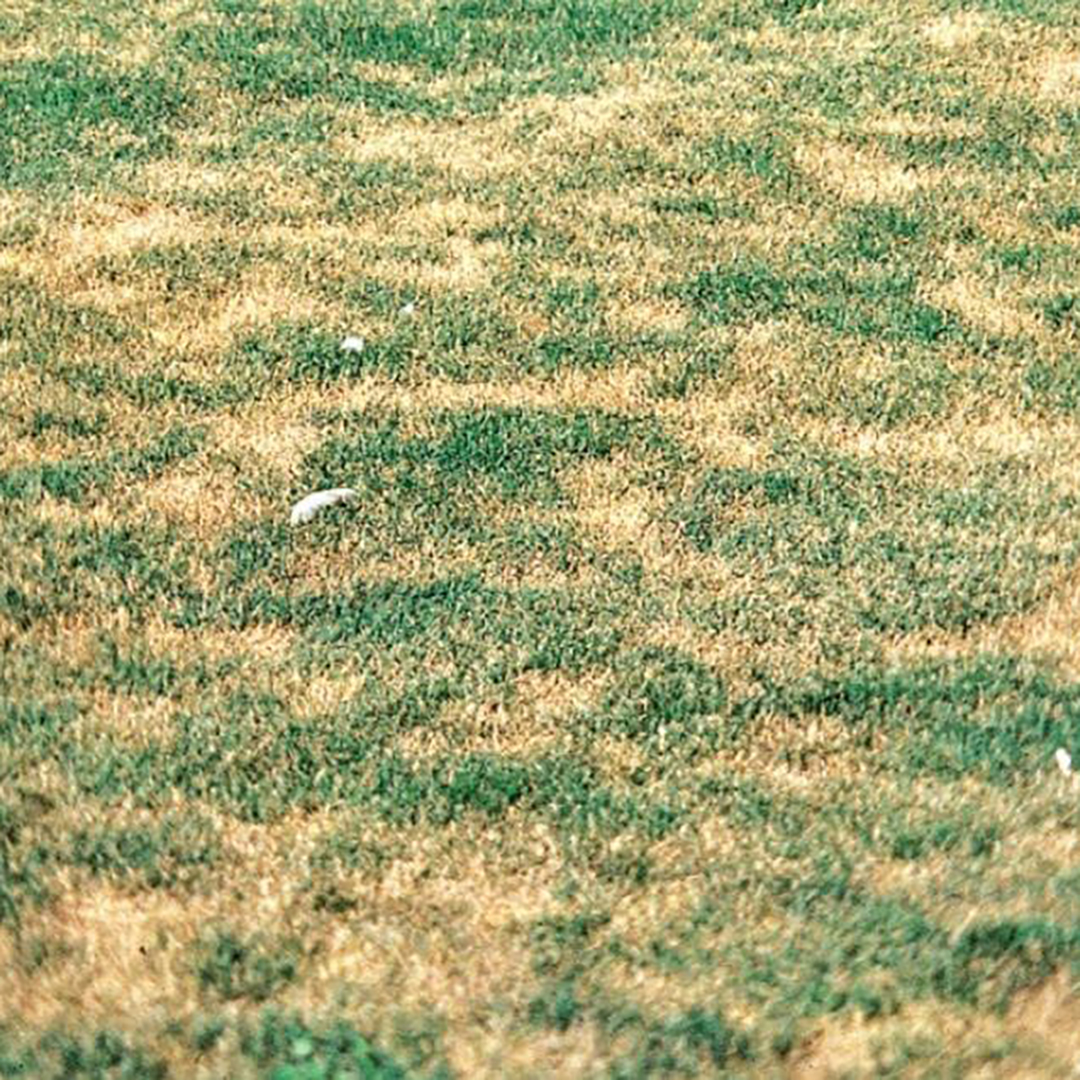
Sod Webworm Damage
Sod webworms prefer bermudagrasses in our area, but will feed on any turf.
Larvae cut off grass blades just above the thatch line, pull them into their tunnels, and eat them.
The injury appears as small brown patches of closely cropped grass. Where many larvae are present, patches merge into large, irregular brown patches.
In early spring, larvae may begin feeding, but the most severe damage typically occurs in July & August.
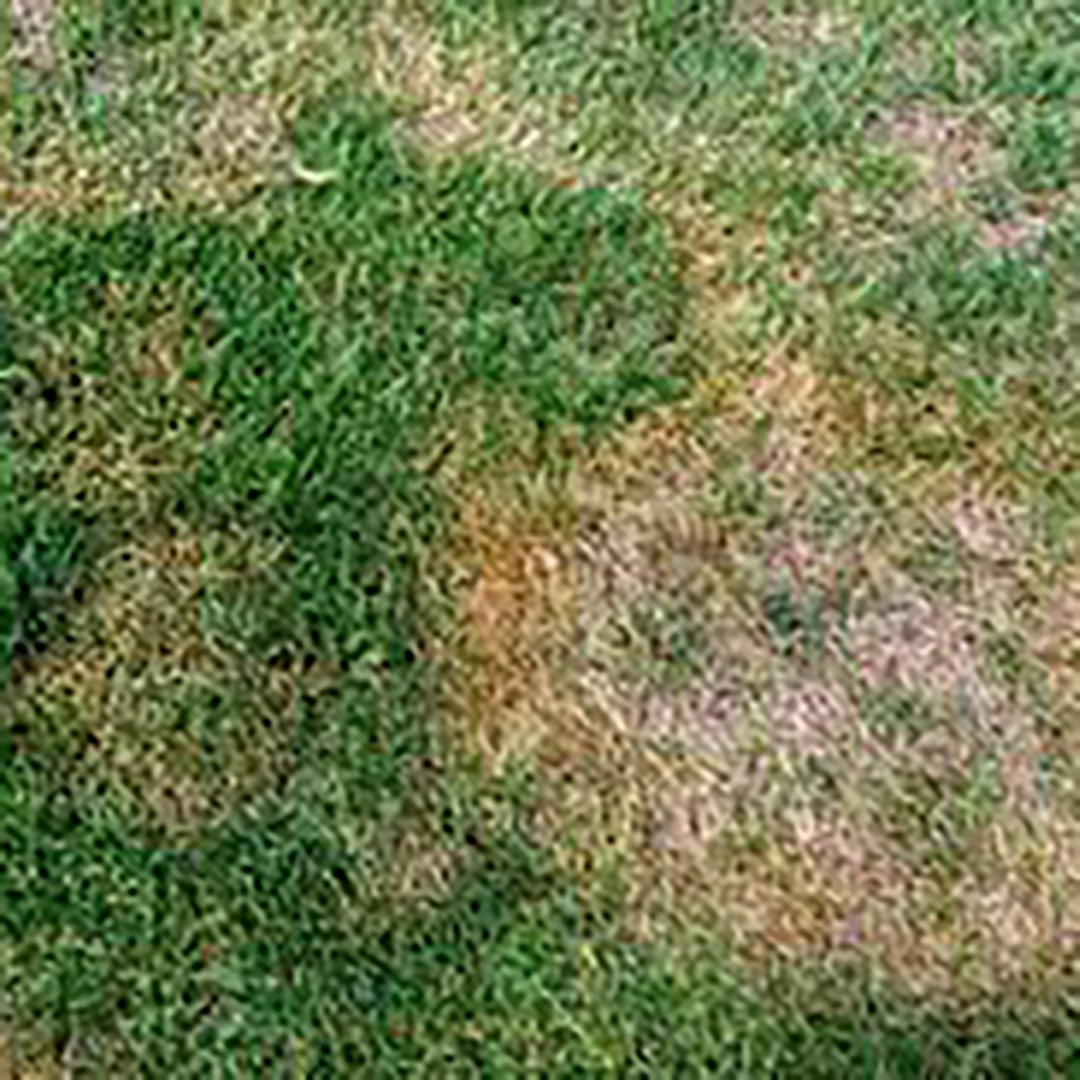
Turf diseases may not spread as quickly as some insects, but the damage that they cause can be equally catastrophic to tall fescue. Fungicides can prevent most damage, but there is still a risk for improperly watered lawns or lawns with unusually heavy disease pressure due to shade or drainage issues. Please be sure to call us at the first sign of browning or yellowing.
Below are some of the most common fungal diseases of Tall Fescue Lawns in Hampton Roads.
Our 5-round Disease & Damaging Insect Control program will help protect your lawn against these threats.
See our D.I.Y. Page for do-it-yourself options.
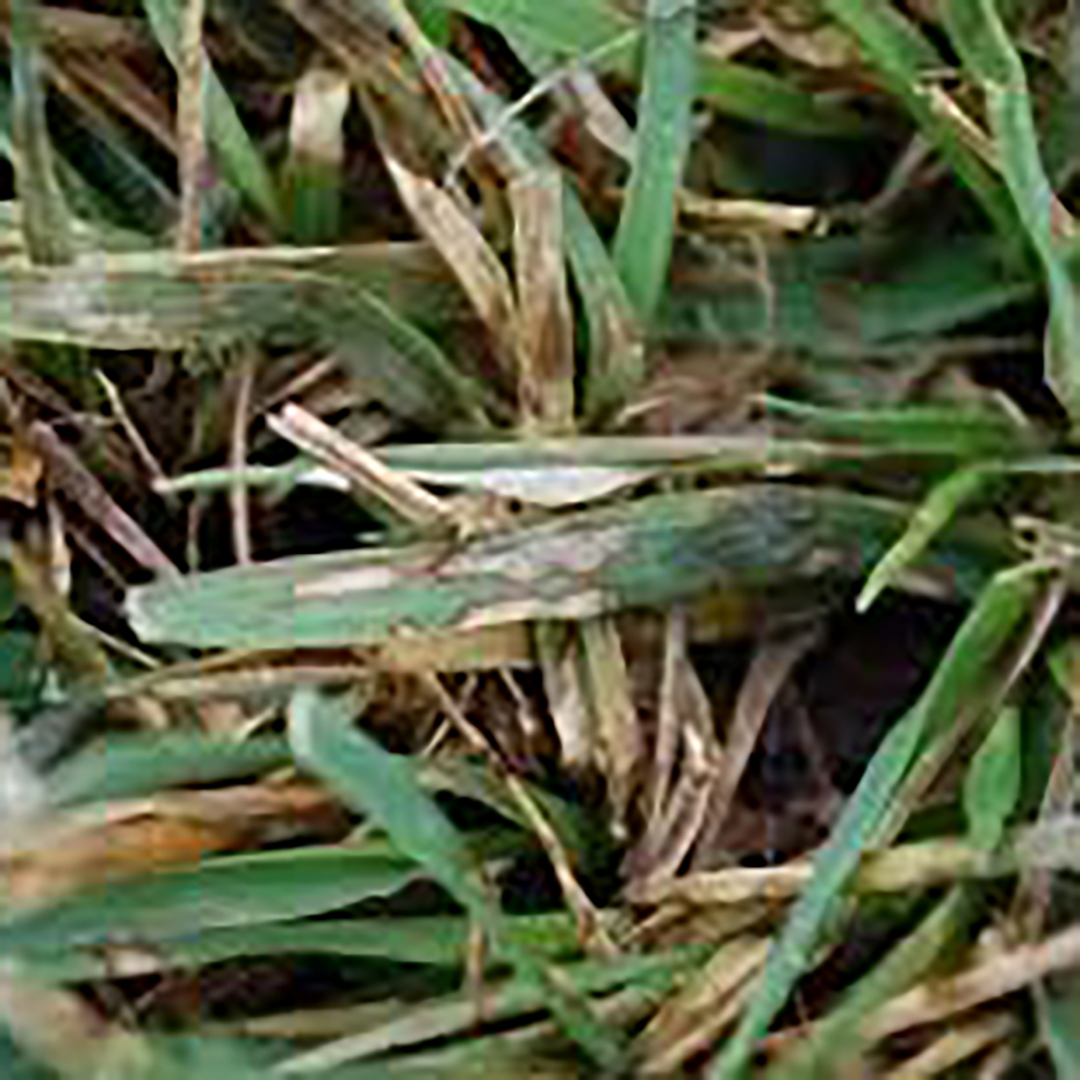
Brown Patch Damage
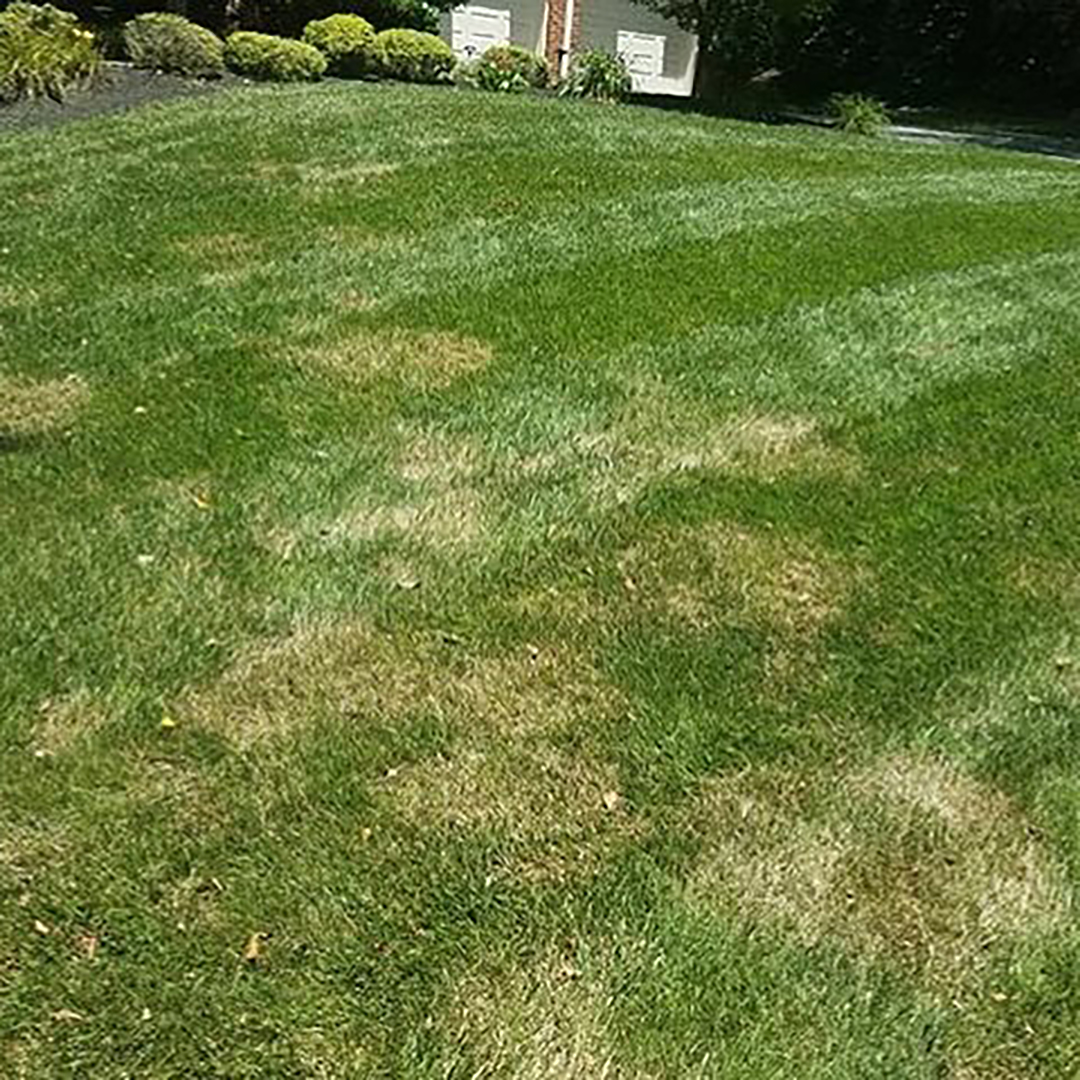
Brown Patch Damage
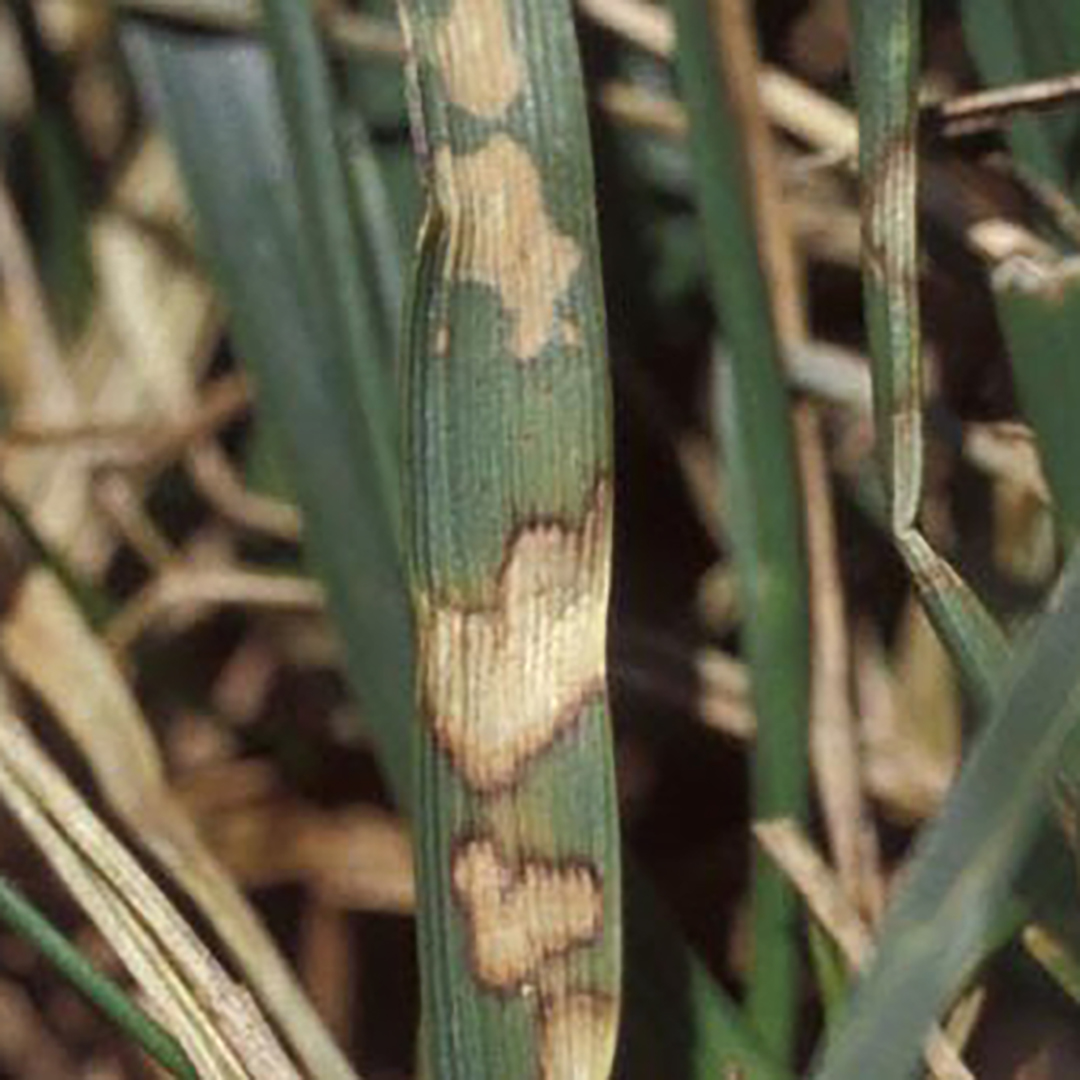
Brown Patch Lesion
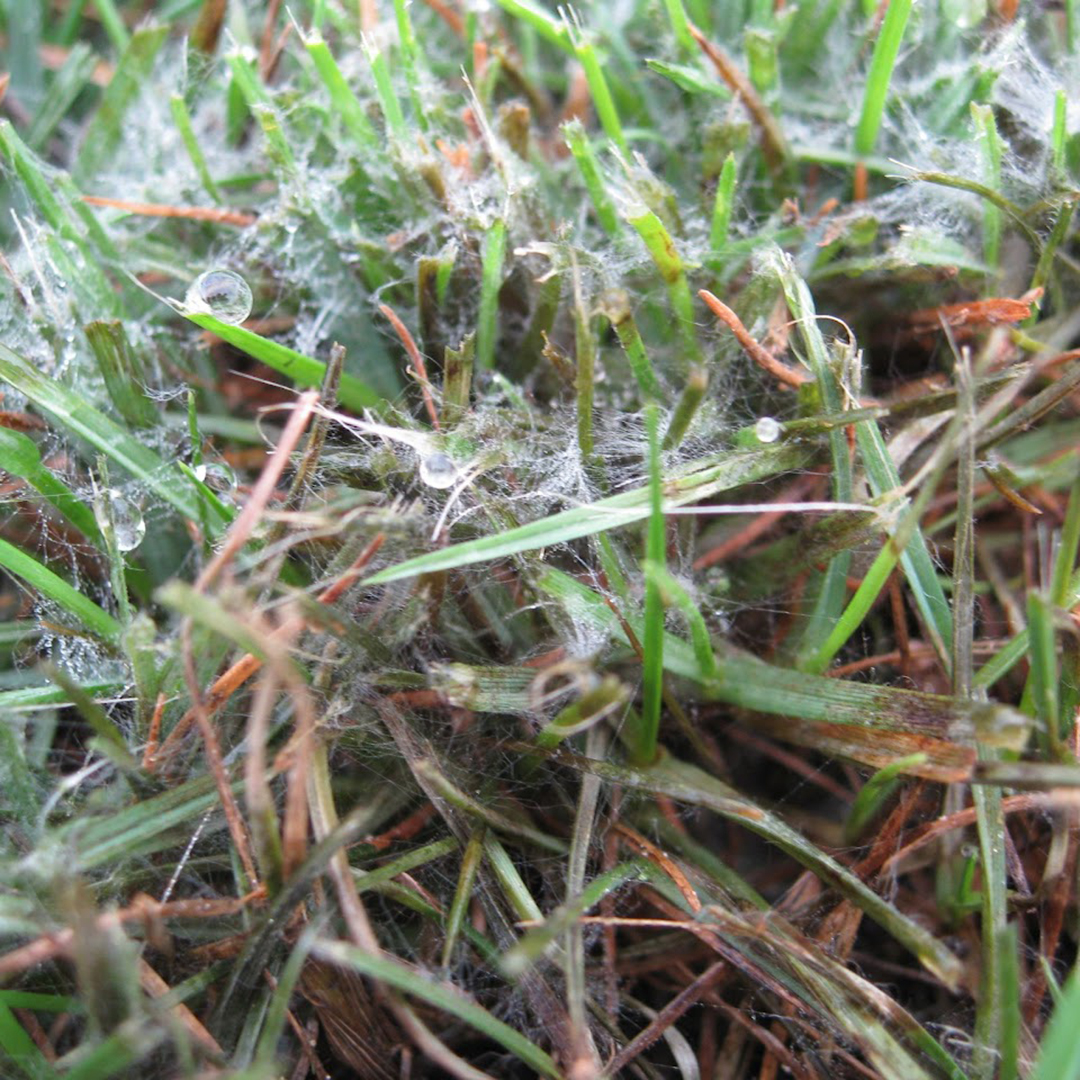
Brown Patch Mycelium
Brown patch is a common fungal disease of turfgrasses, particularly cool-season species like Tall Fescue.
Brown patch disease is generally well controlled by fungicide if the lawn is properly watered and drained.
The disease becomes active in late spring & causes damage throughout summer before going dormant in early fall.
Brown patch damage often slows down in very hot weather; unfortunately, disease-weakened turf is more susceptible to injury from heat & drought.
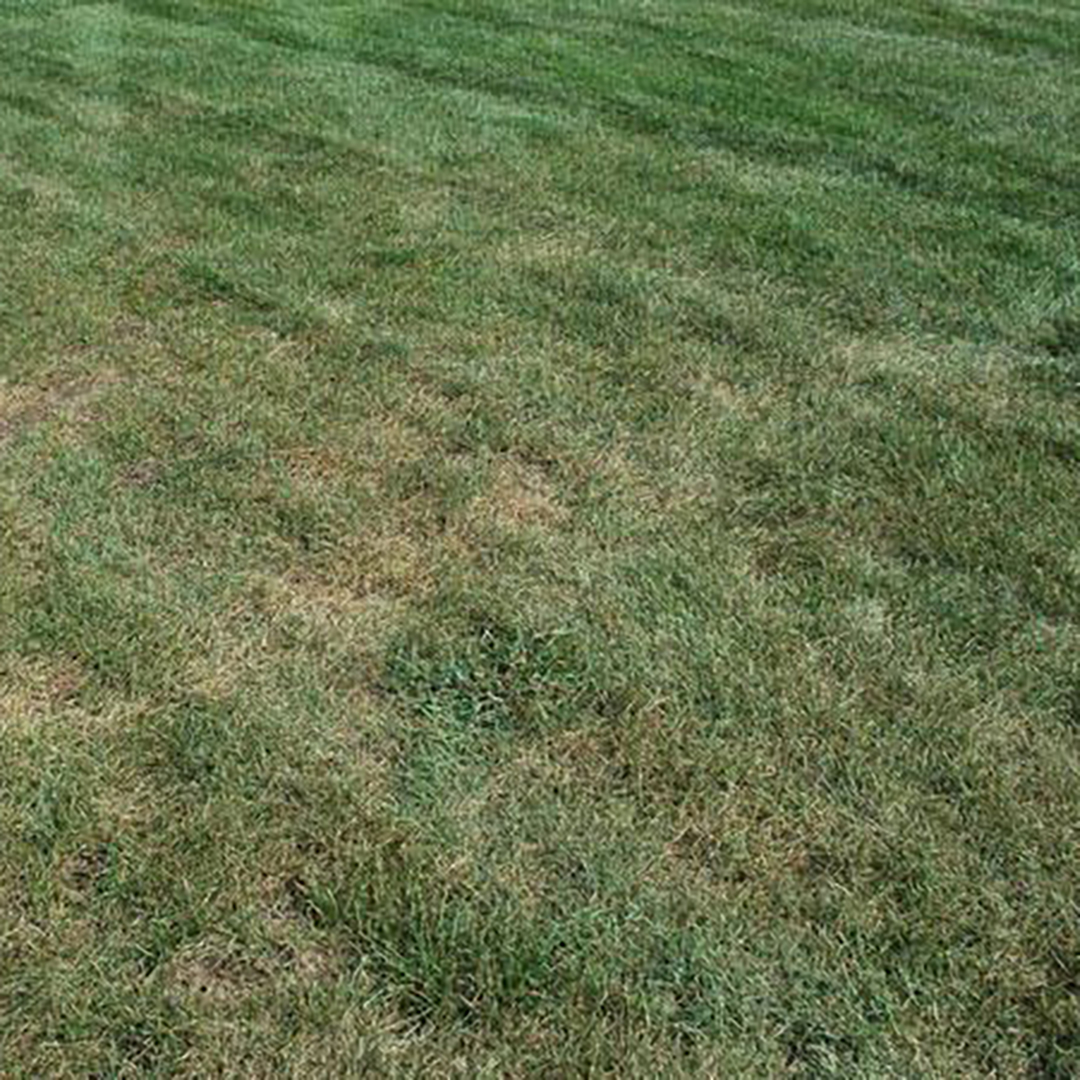
Grey Leaf Spot Damage
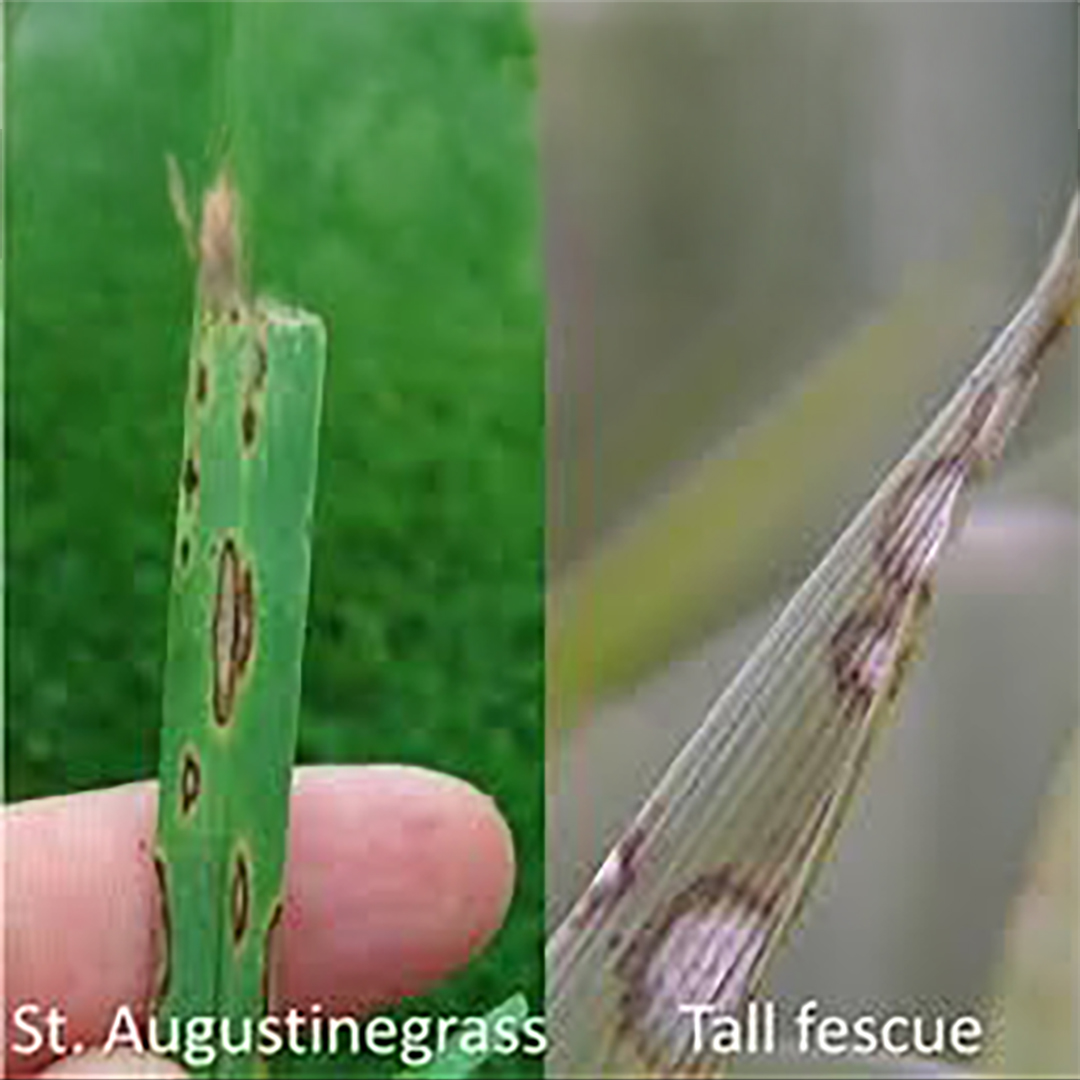
Grey Leaf on St. Augustine & Fescue
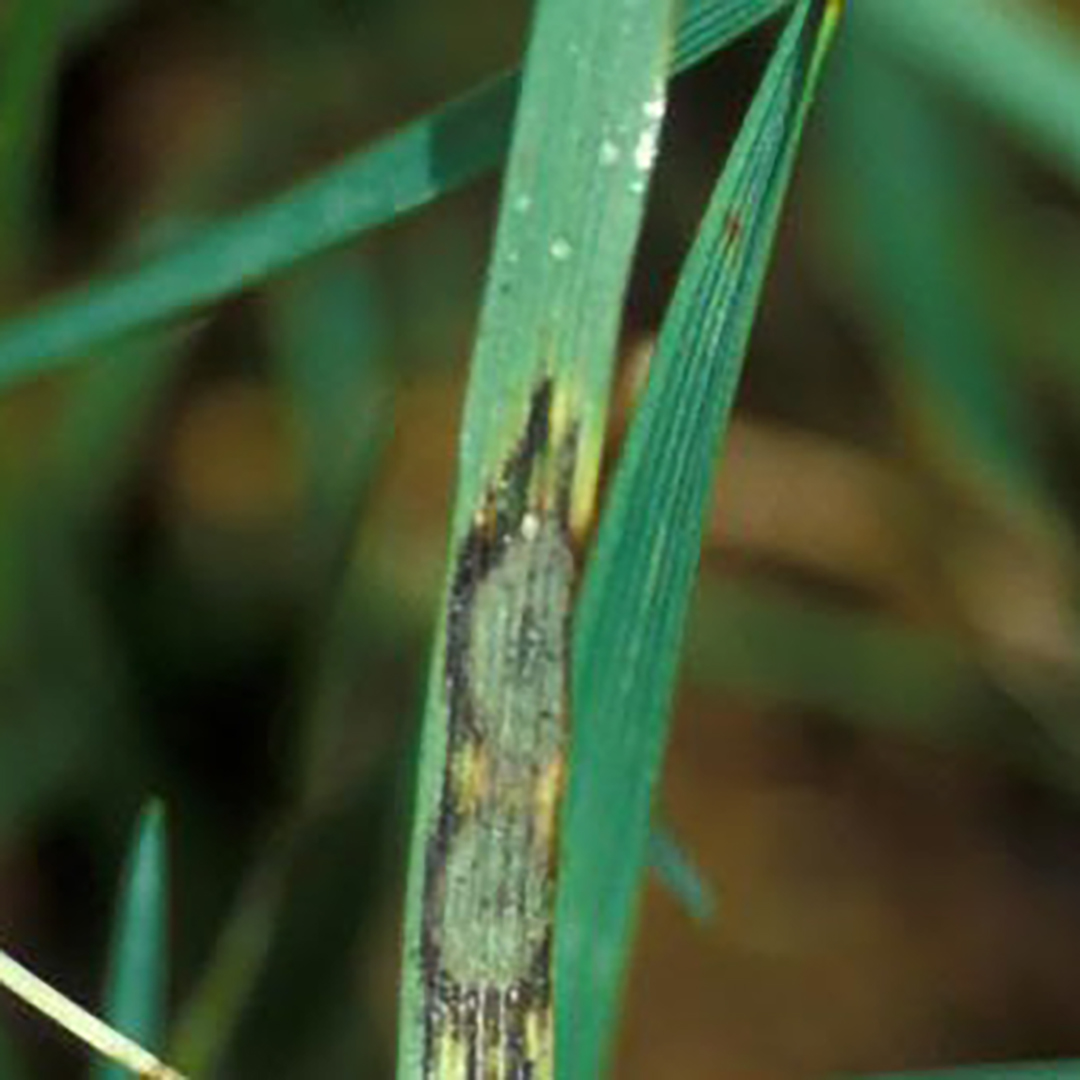
Grey Leaf Spot Lesion
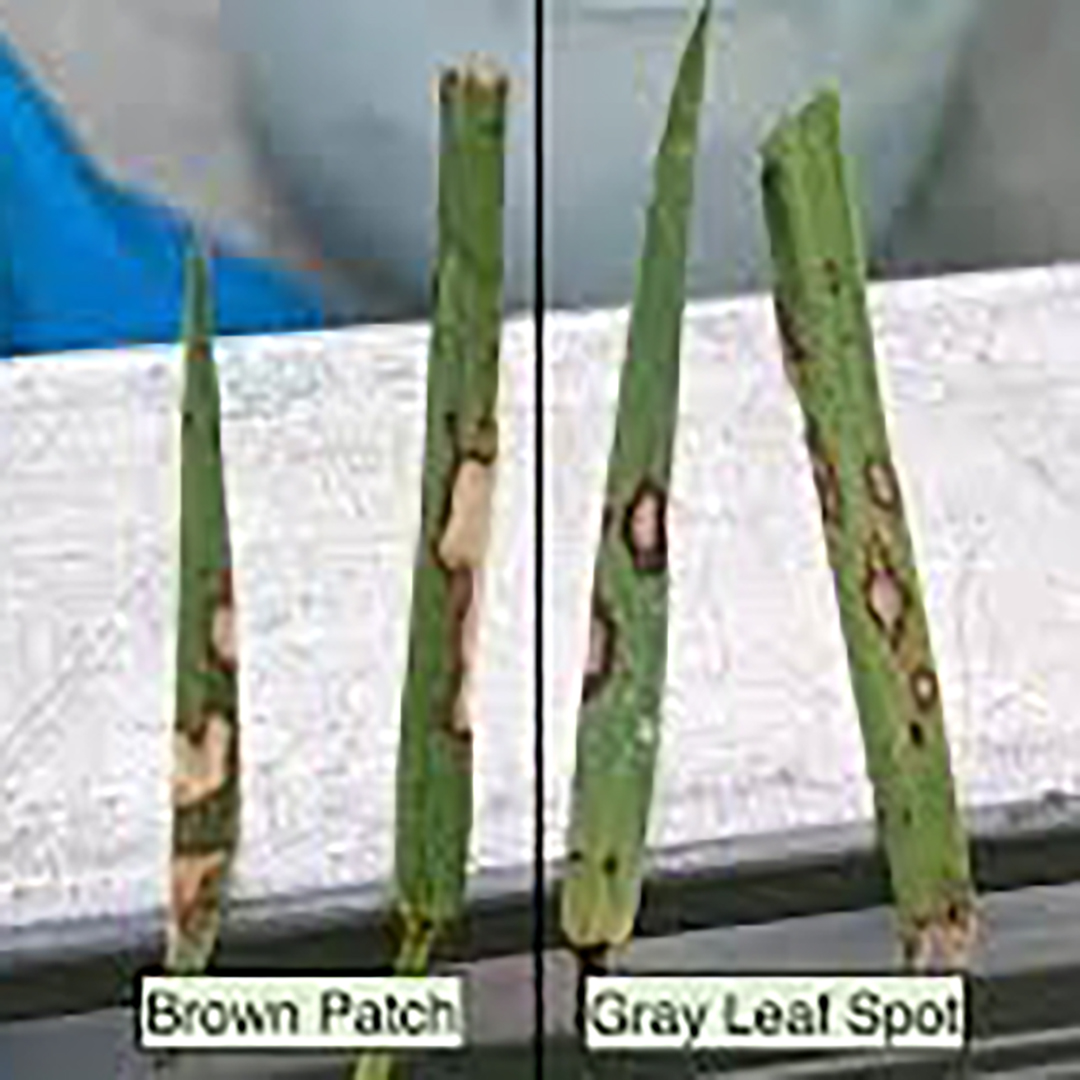
Grey Leaf Spot vs. Brown Patch
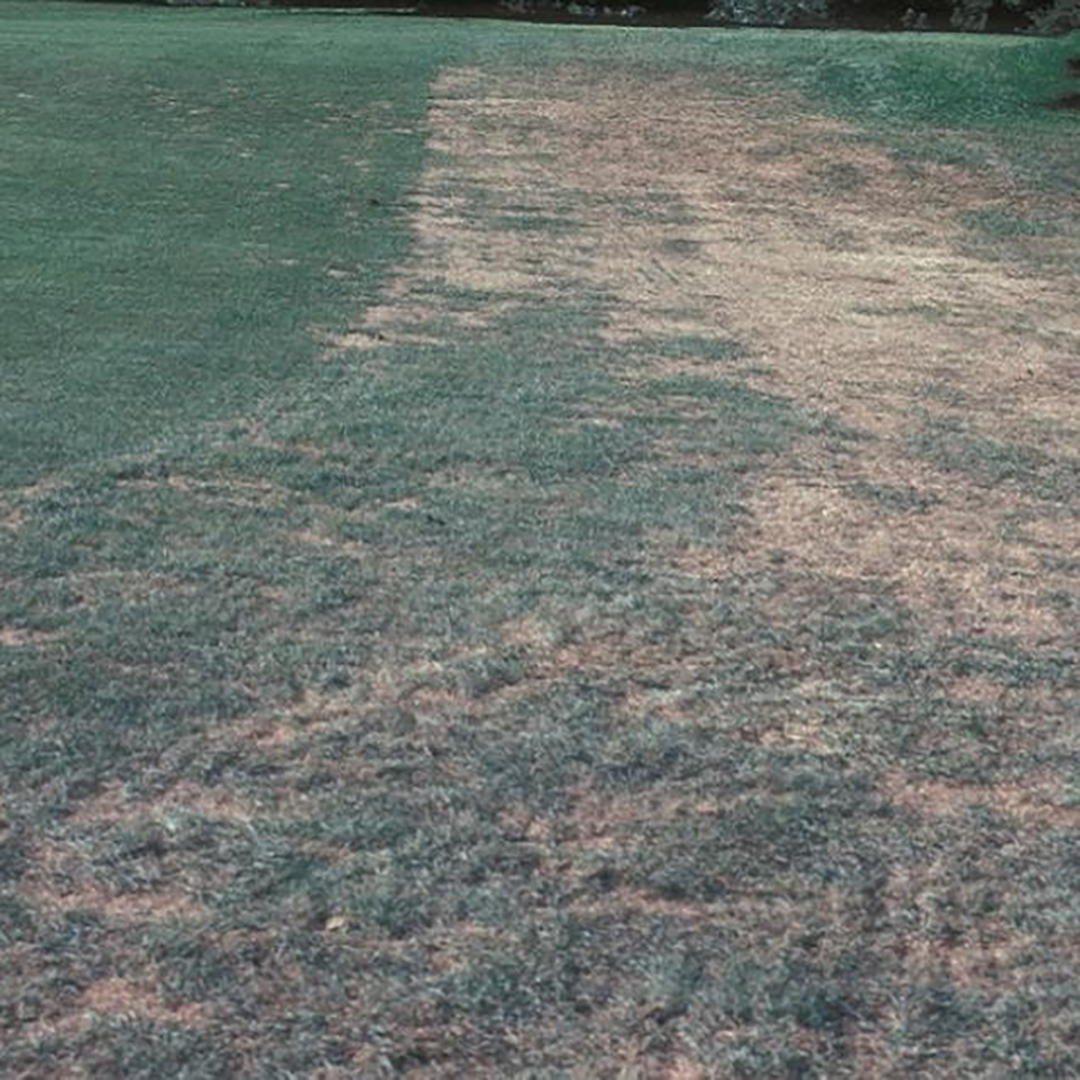
Grey Leaf Spot Damage
Gray leaf spot is a destructive fungal disease of turfgrass. It can rapidly damage and kill large areas of turf, particularly susceptible species such as Tall Fescue and St. Augustine grass.
Grey leaf spot disease is generally well controlled by fungicide if the lawn is properly watered and drained.
The disease becomes active in early spring & causes damage throughout summer before going dormant in late fall. It often lingers well into fall and is a threat to Fescue seedlings.
Grey leaf spot damage often slows down in very hot weather, although not to the extent of brown patch disease. Turf weakened by disease is more susceptible to injury from heat & drought.
Grey Leaf Spot Damage
Grey Leaf on St. Augustine & Fescue
Grey Leaf Spot Lesion
Grey Leaf Spot vs. Brown Patch
Grey Leaf Spot Damage
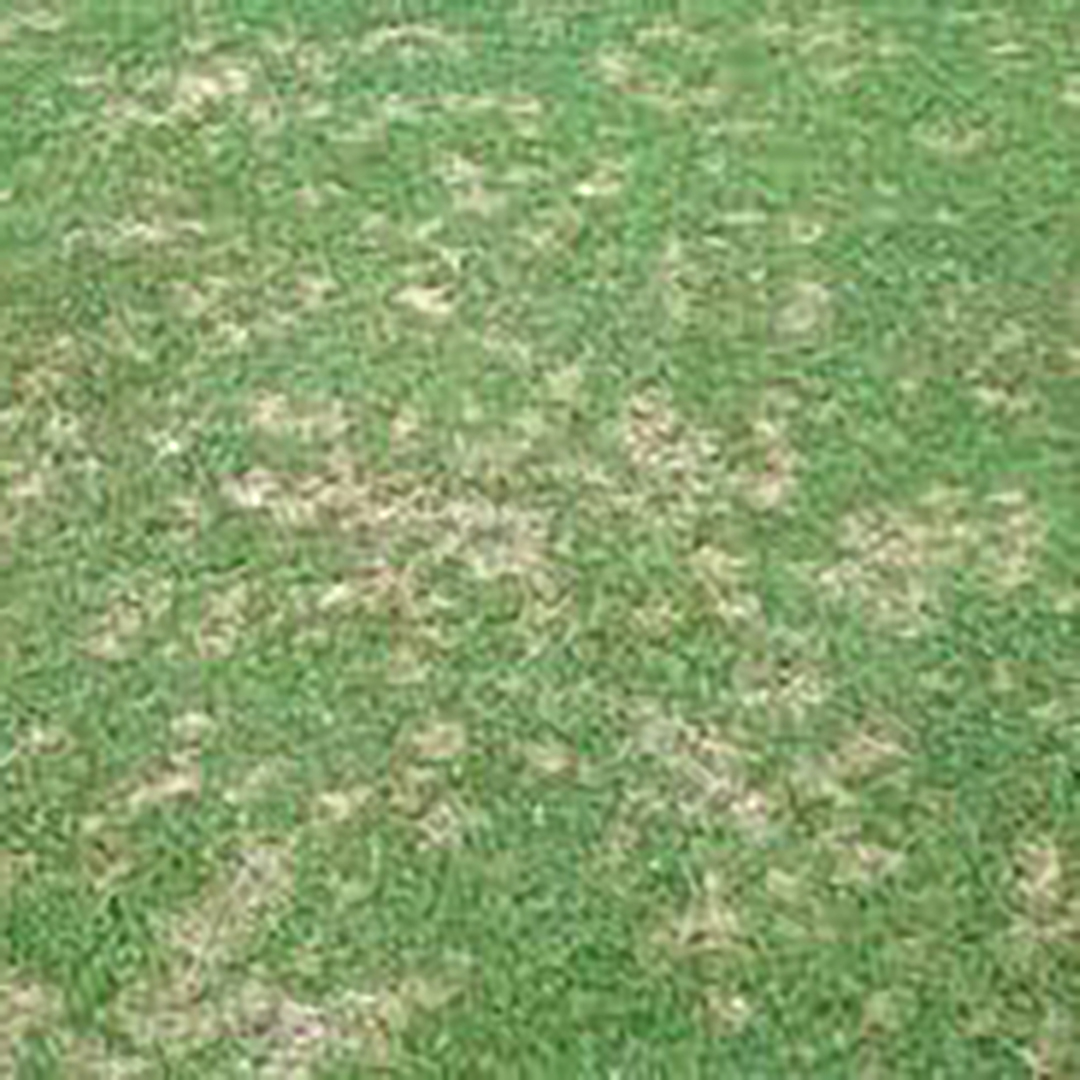
Dollar Spot Damage
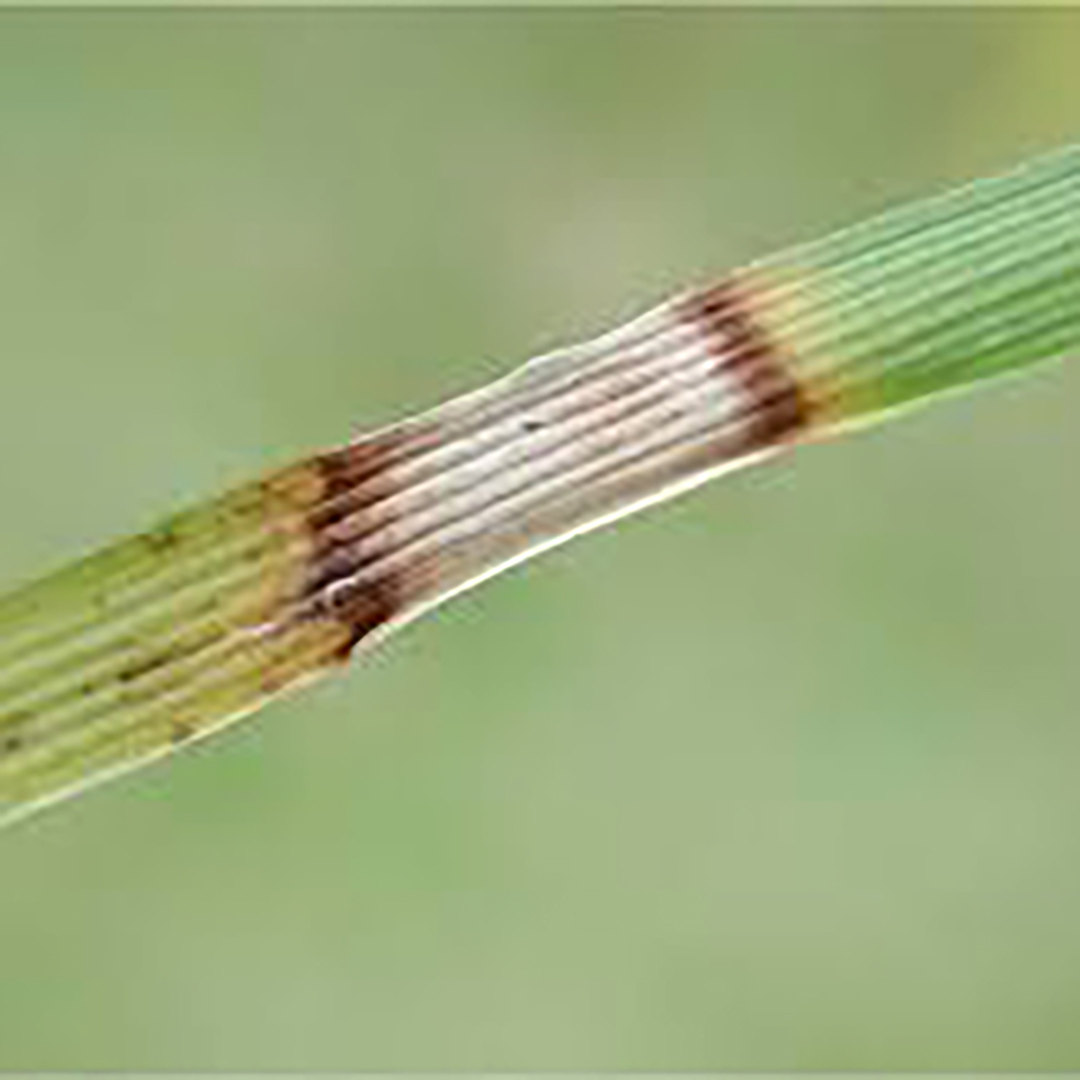
Dollar Spot Lesion
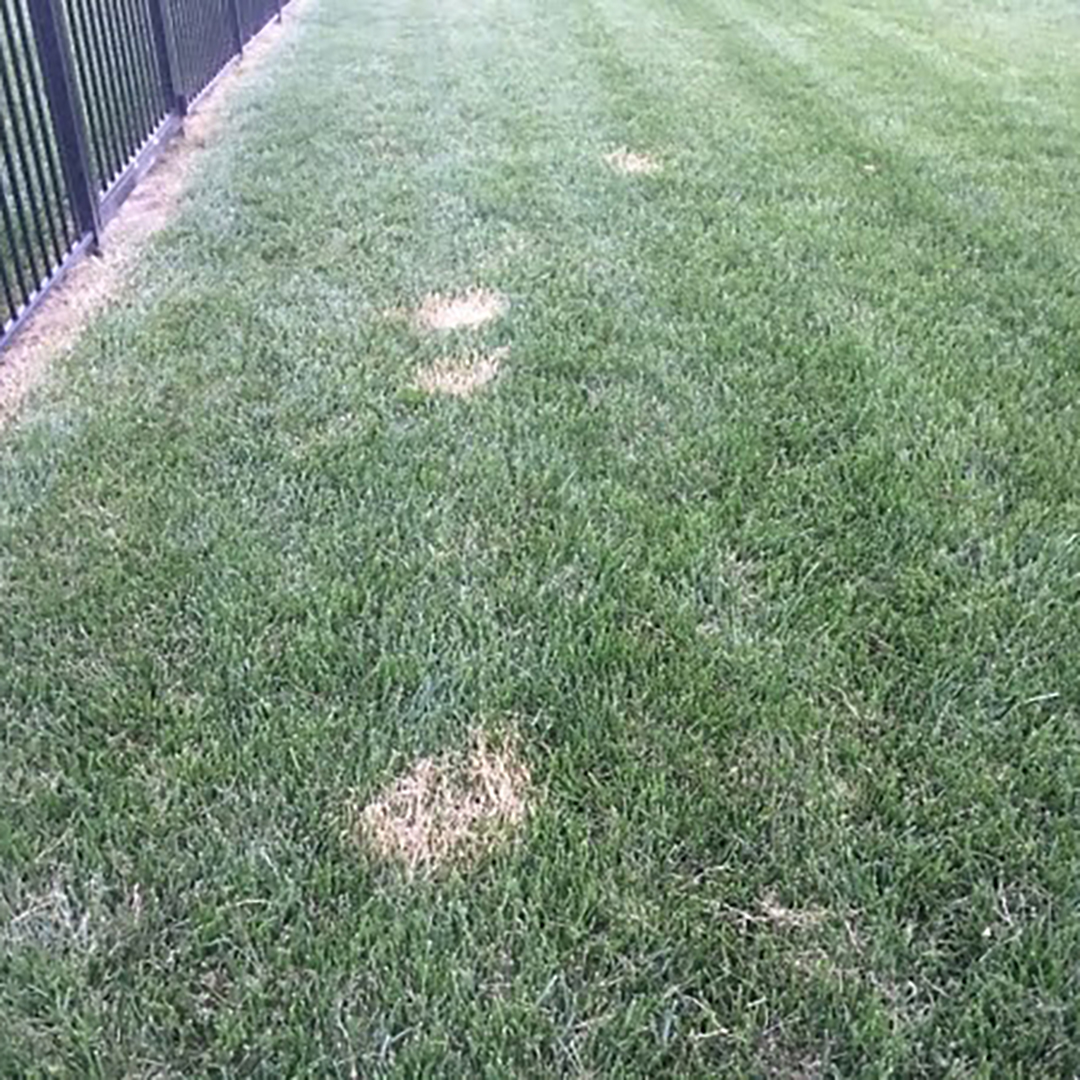
Dollar Spot Damage
Dollar spot is one of the most common and widely recognized fungal diseases affecting nearly all cultivated turfgrass species worldwide.
The disease can be controlled by fungicide if the lawn is properly watered, drained, mowed and fertilized. Supplemental fungicide applications may be needed in lawns with high disease pressure.
The name “dollar spot” comes from the characteristic circular patches it forms, which are roughly the size of a silver dollar (1-2 inches in diameter) on closely mown turf like golf greens.
On taller turf (e.g., home lawns), these spots can coalesce and expand into larger, irregular patches several inches to a foot or more in diameter.
The disease becomes active in early spring & causes damage throughout summer before going dormant in late fall.
Dollar spot damage slows down in very hot weather. Turf weakened by disease is more susceptible to injury from heat & drought.
From April through August, our turf disease and insect control program provides season-long protection with timed treatments, root stimulants, and gentle nutrients that keep your lawn healthy, resilient, and stress-free during peak summer conditions.

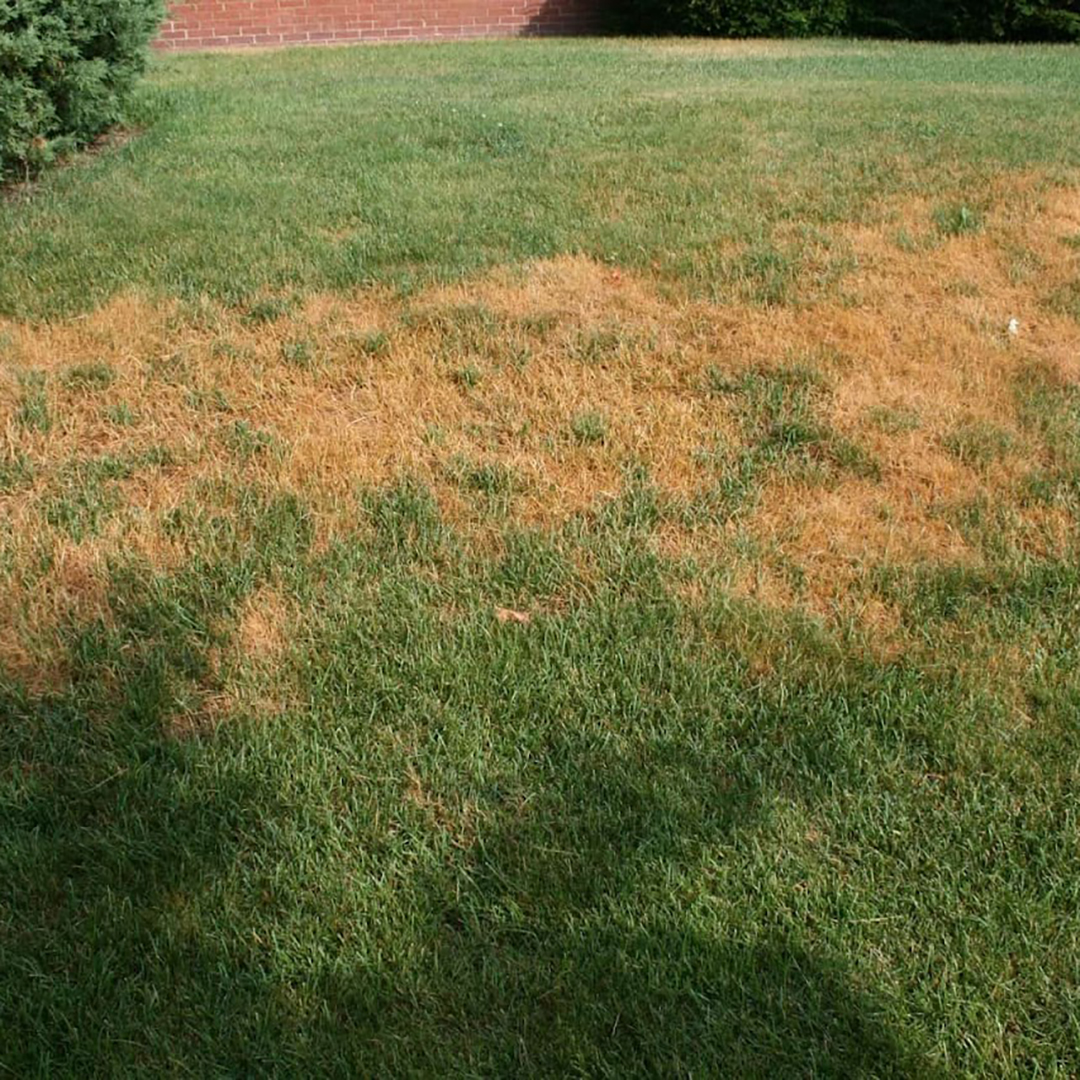
Occurs first in the sunniest areas of the lawn or along concrete
Heat Stress Damage
Imagine your lawn is like a person trying to run a marathon on a super-hot day. When it’s too hot, even if they’re well-trained, they’re going to struggle to perform at their best. That’s essentially what happens to your tall fescue lawn when it experiences heat stress.
Tall fescue is a “cool-season” grass, meaning it prefers milder temperatures, ideally between 60 – 75°F. When temperatures consistently climb into the 80s, 90s, or even higher, your lawn starts to feel the heat.
Occurs first in the sunniest areas of the lawn or along concrete
Heat Stress Damage
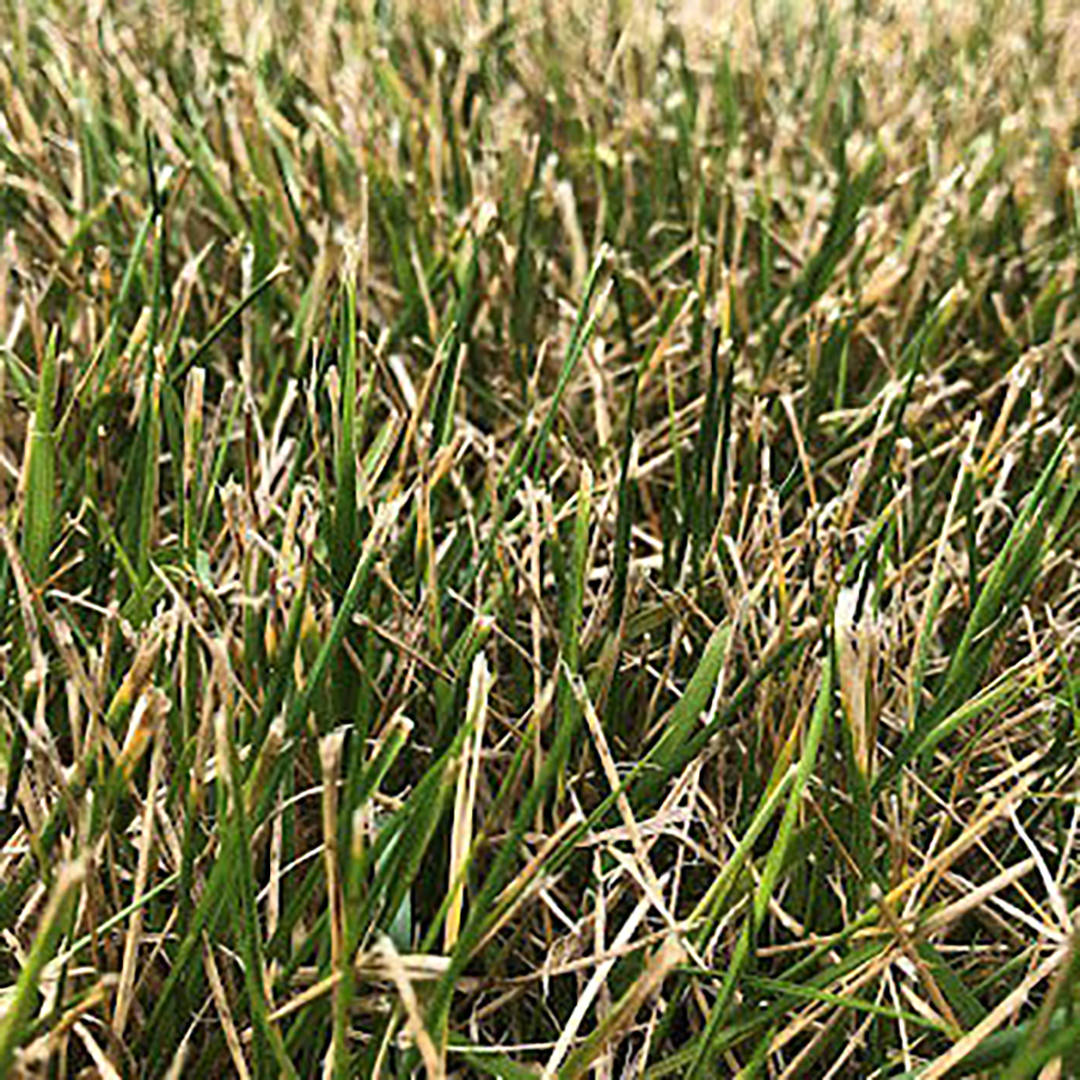
Drought Stress
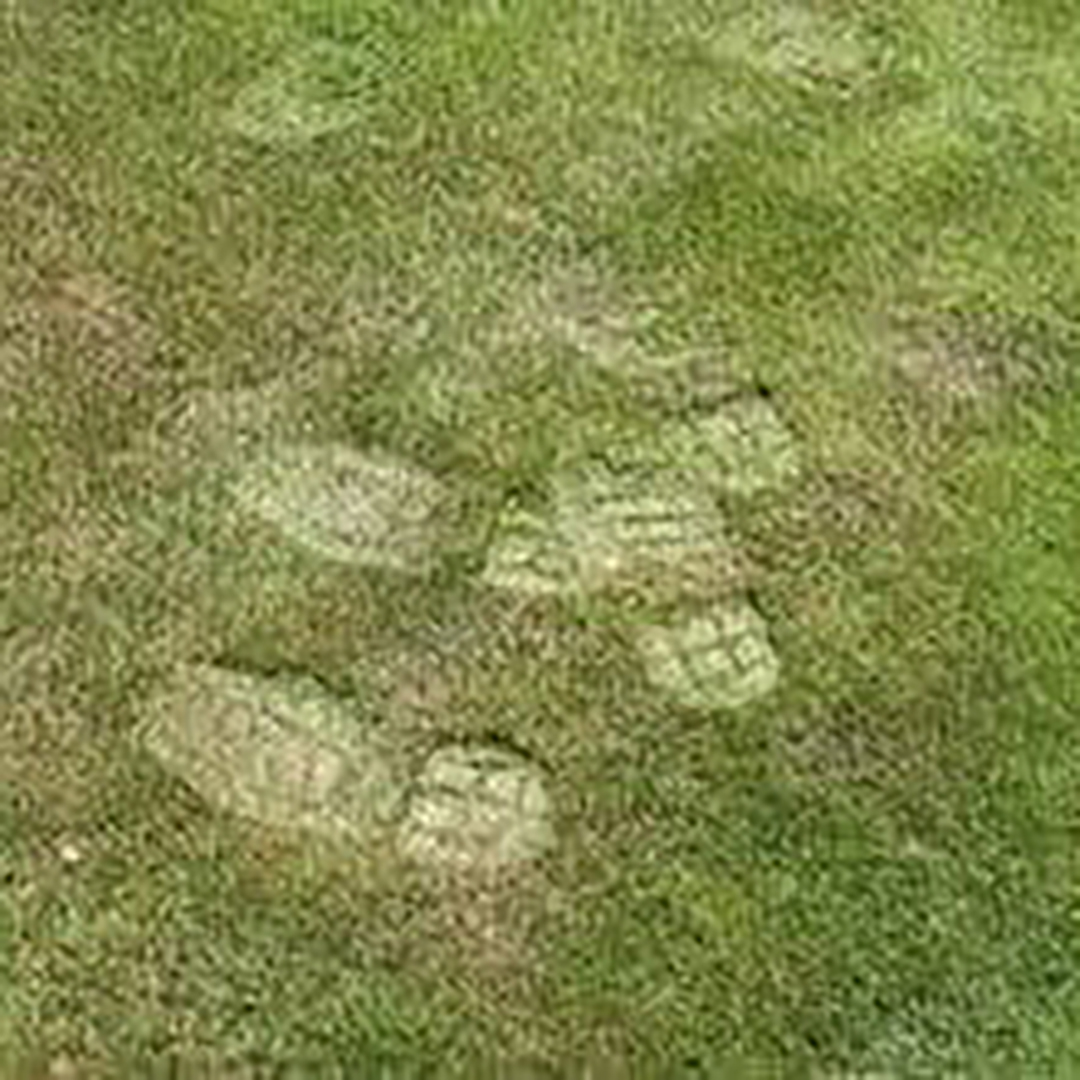
Drought Stress Damage
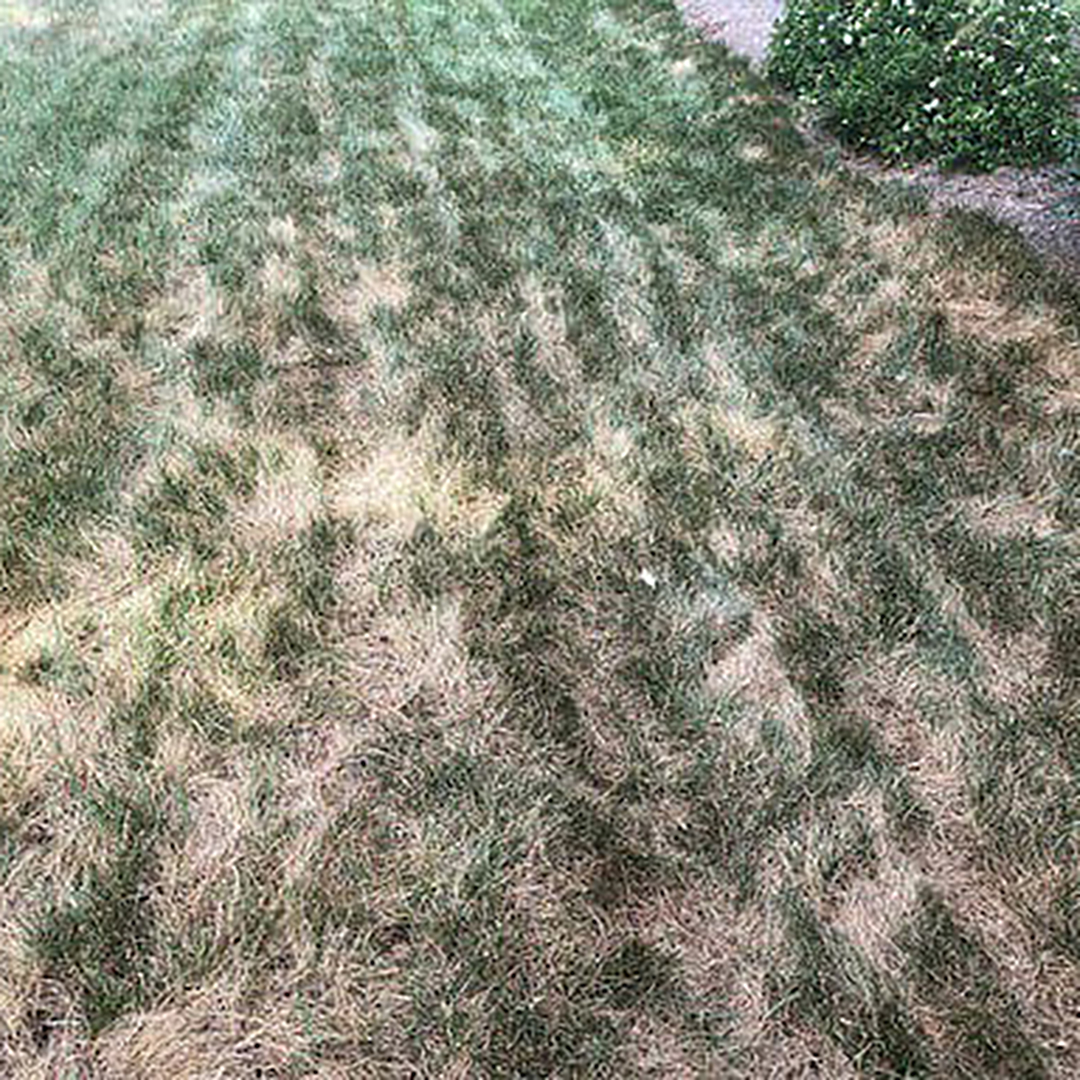
Drought Stress Damage
Think of your lawn like any living thing – it needs water to survive, just like you do. When there’s not enough water, or the water supply dries up, your Tall Fescue lawn experiences drought stress. This is a common problem, especially during hot, dry spells with little rain.
Tall Fescue is a “cool-season” grass, meaning it prefers heavy watering and cooler temperatures. When the rain stops and the heat cranks up, it quickly begins to struggle.
If your lawn is struggling during extreme heat or dry conditions, contact us with any questions. Our team can help identify stress issues early and recommend the right steps to protect and recover your turf.
Careful watering is more important for fescue than for any other turf grown in the region. During summer, we want to balance hydrating the plant with promoting disease, and during the fall, we want to promote seed growth. Your specific watering needs may differ slightly, but here is our general recommended watering schedule:
Jan – April – Do not water unless the lawn has been seeded. Contact Dreamlawns before seeding, as there are risks to spring seeding that we need to discuss.
April – May – Water no more than once a week and only if needed. The goal is 3/4 – 1 inch of water per week. Rotors and fan sprinklers should be run for 30 – 45 min once per week, and fixed heads for 5 – 20 min, unless we have already had 1 inch of water that week.
Jun – Aug – Water no more than twice a week. The goal is 1 – 1.5 inches of water per week. Rotors and fan sprinklers should be run for 45 min – 1 hour twice per week, and fixed heads 5 – 20 min, unless we have already had 1 inch of water that week.
Immediately after fall seeding – Water every seed on the lawn twice a day (10 – 15 minutes per zone) until new seedlings are 3.5 inches tall. Typically 3 – 5 weeks.
Late fall (once seedlings are at 3.5 inches) – Water no more than once a week and only if needed. The goal is 3/4 – 1 inch of water per week. Rotors and fan sprinklers should be run for 30 – 45 min once per week, and fixed heads for 5 – 20 min, unless we have already had 1 inch of water that week.
We advise winterizing your irrigation system in December to avoid damage.
It’s best to water early in the morning and (if needed) early afternoon. Evening watering should be avoided. If evening is the only time that you can water, go ahead and do so, but keep a close eye out for signs of disease.
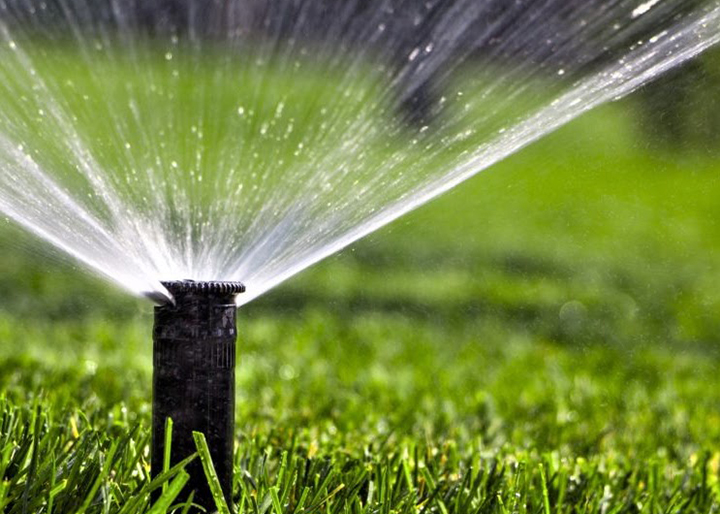
Fixed Head
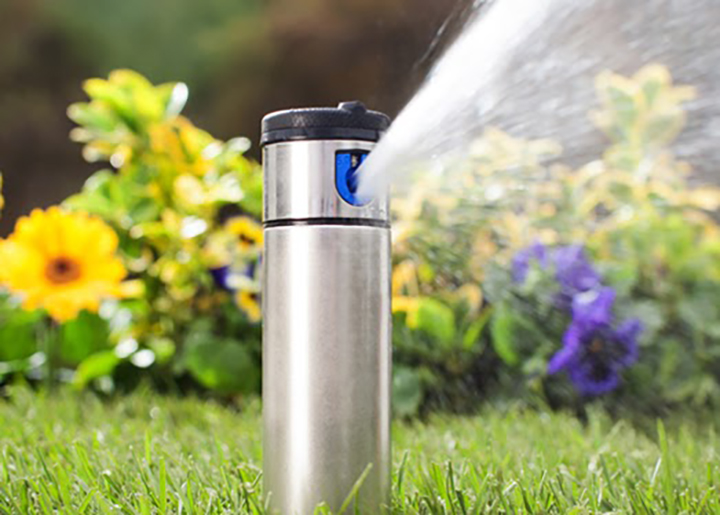
Rotar Head
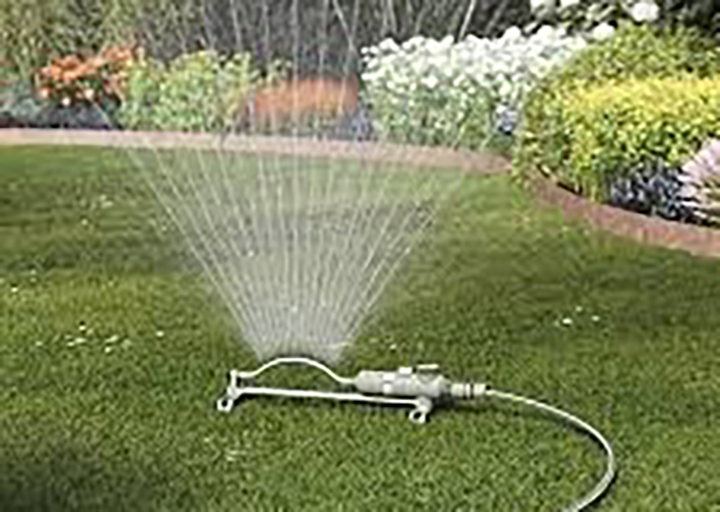
Fan Sprinkler
Tall fescue is not very tolerant of improper mowing. We suggest mowing it at 3.5 – 4 inches high all year long except for one time, just before seeding, when you’ll mow down to about 2 inches to improve seed to soil contact. Skip bagging unless you’re prepping for seeding or you notice that you’re leaving clumps. Be sure to sharpen your mower blades once or twice a year.
Jan – Feb – Mow at least twice a month. Failure to mow in winter will cause discoloration, poor turf health, and reduced herbicide effectiveness.
Mar – April – Mow at least once per week, but twice a week is better. This is the most active growing season for fescue. Frequent high mowing will help the lawn to thicken a little as we head into summer and ensure the herbicide is as effective as possible.
May – June – Mow once per week at 4 inches. Mowing high and frequently will help your lawn root deeply and store carbohydrates in preparation for summer.
Jul – Aug – Mow as needed to keep the lawn at 4 inches. If the lawn is not growing due to heat or drought stress, don’t cause more stress by mowing unnecessarily. Don’t allow the lawn to get taller than about 5.25 inches, as the lawn will be damaged if too much leaf surface is removed. Above all, just be sure to keep the lawn at 4 inches tall.
Sep – Dec – Mow at 1 1/2 – 2 inches one time just before seeding. Skip mowing until new seedlings are 3.5 inches tall and then mow at least weekly (at 3.5 – 4 inches) until growth slows for winter.
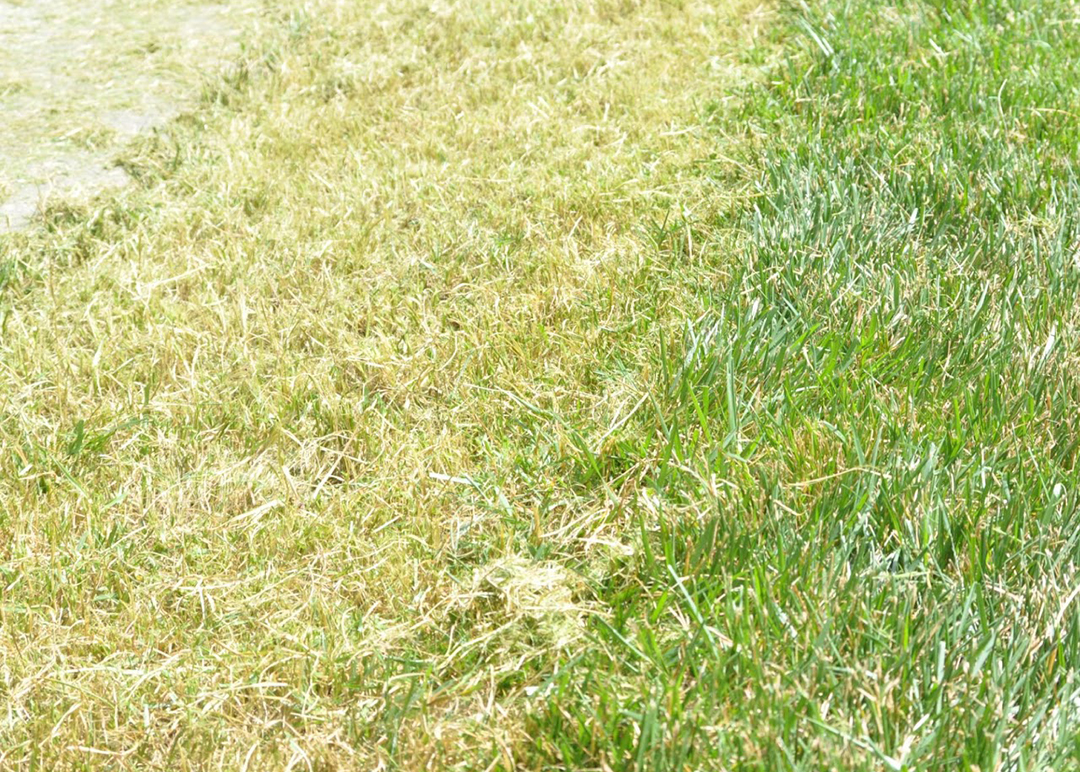
Fescue will be damaged by low mowing, or by removing more than 1/3 of the leaf blade. It will normally recover with proper mowing.
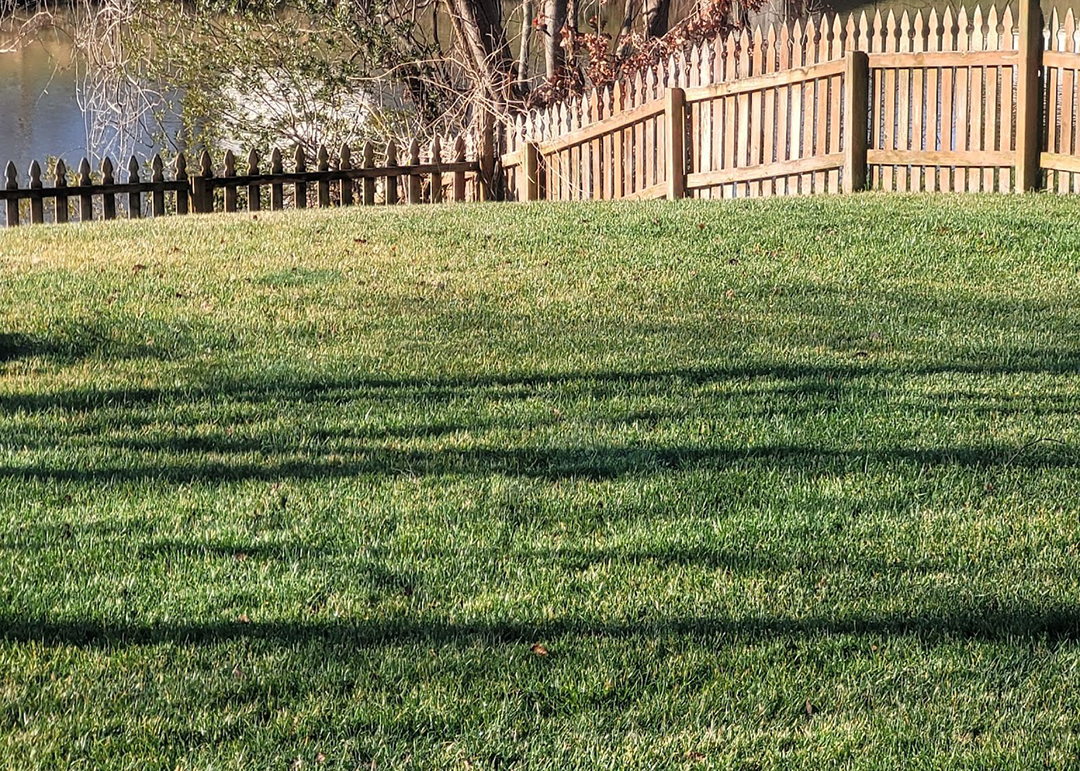
Fescue will often exhibit discoloration over winter. This discoloration can be reduced or eliminated with regular mowing.
Promptly Remove Pet Waste – Many people believe that pet waste is healthy for turf when in fact it is very acidic (which is damaging to turf, especially in summer) and also very bad for local waterways. To avoid damage to your turf, please promptly pick up any solid waste. Liquid waste can also be damaging, but it is very difficult to mitigate.
Address any areas of poor drainage – Areas that retain water can increase disease pressure, create dead spots, and promote water-loving weeds such as sedges. We suggest filling low areas with soil shortly before seeding. Dry wells and drainage systems can also help.
⚠️ IMPORTANT: DO NOT Apply Your Own Chemicals – Please DO NOT apply any fertilizer, fungicide, herbicide, limestone or other chemical to your lawn without contacting us first, as these may be incompatible with our products and could damage your turf. We’d be happy to recommend DIY options if you’d like, so please call us for guidance before doing any of your own applications.
Monitor your lawn – If you see any problems such as discoloration, thin areas, weeds, poorly performing seed, “cobwebs” on the lawn (a major sign of disease), brown or yellow patches, or anything that doesn’t look right, please let us know right away so that we can address the issue.
Please call us BEFORE you install any seed or sod. We’ll need to adjust your turf treatments to support your work and avoid any damage.
Correct mowing plays a critical role in lawn health. If you’re unsure about mowing height, frequency, or seasonal adjustments, contact our team, we’re happy to help you get it right.
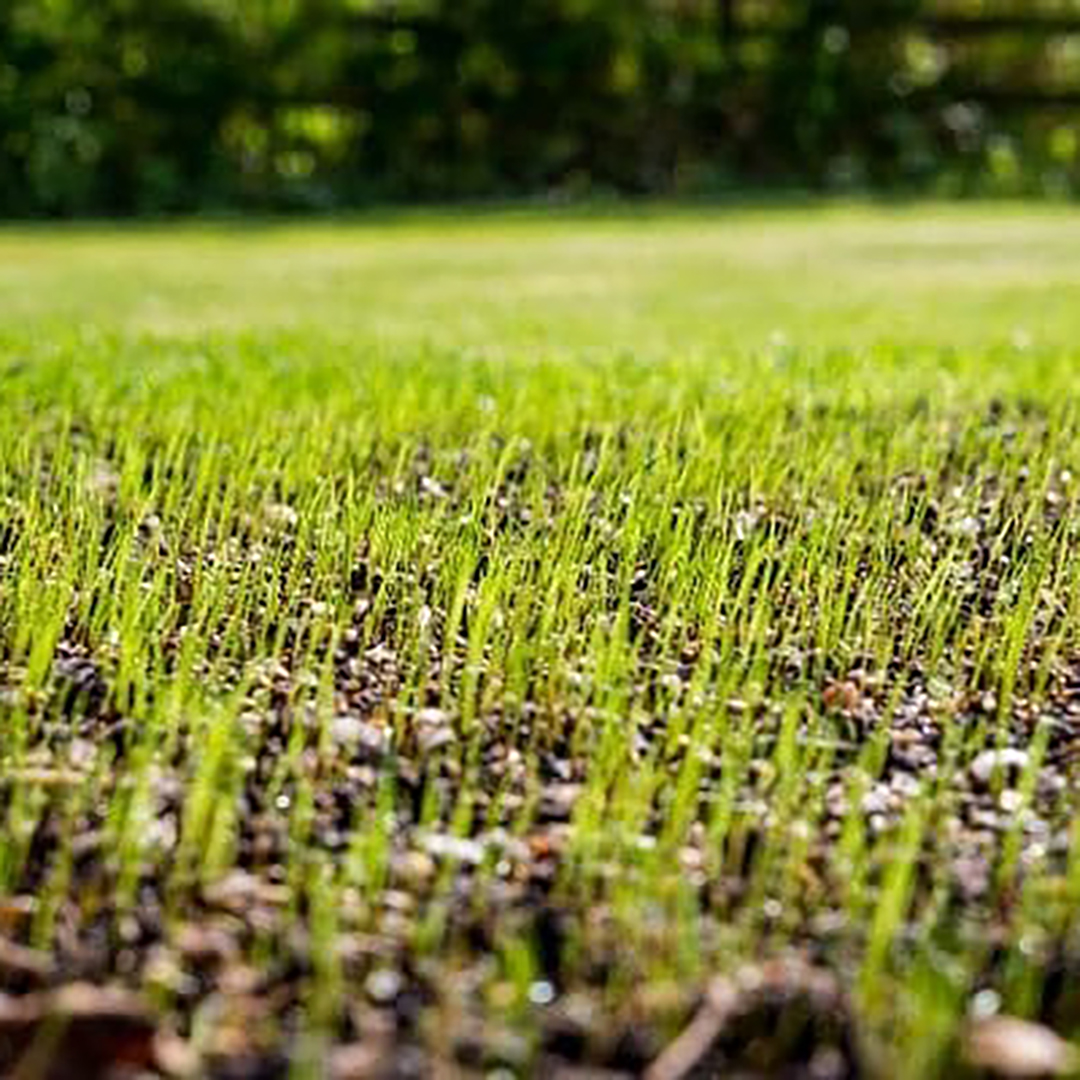
Seeding
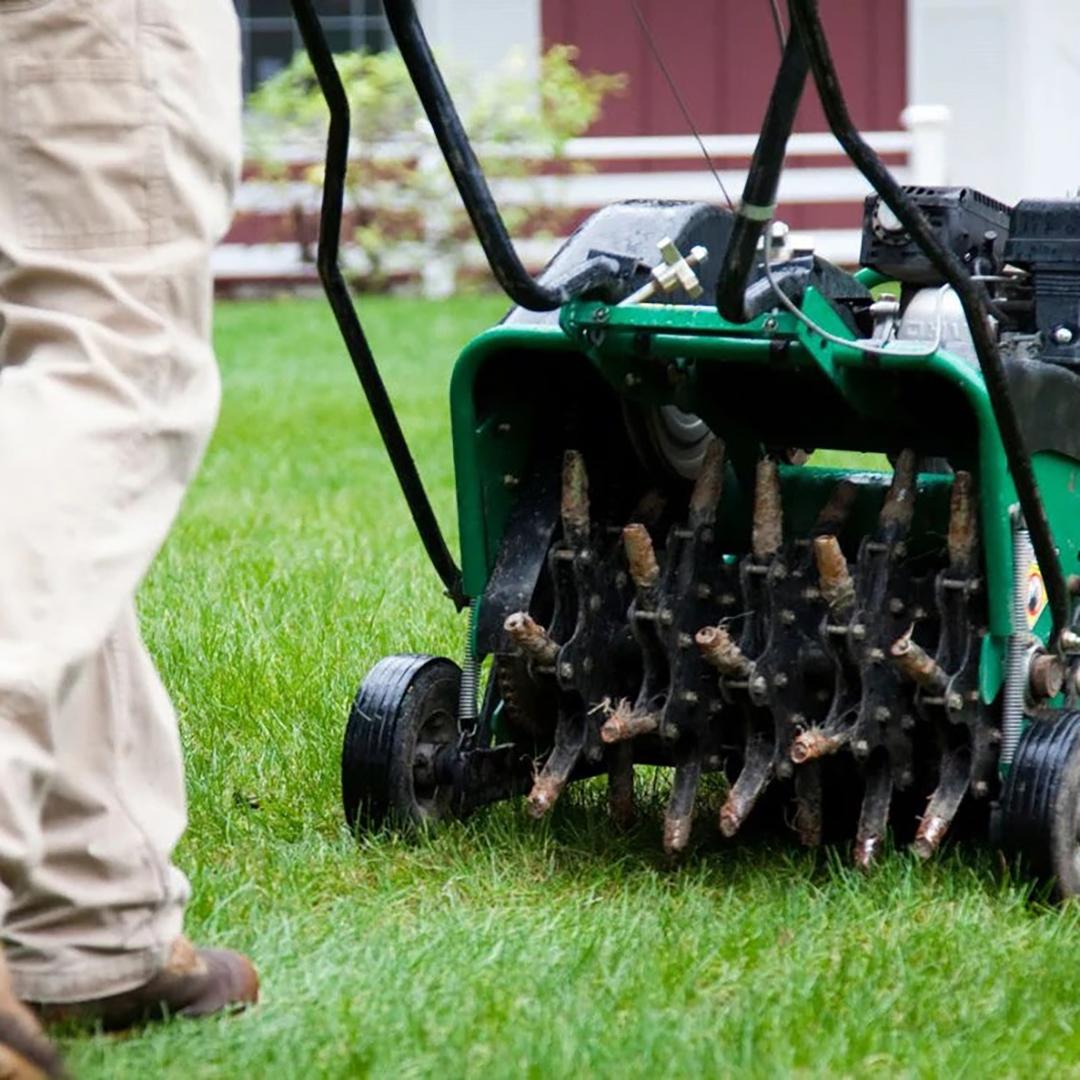
Aeration
Yearly aeration and seeding is the single most important step in maintaining a healthy Tall Fescue lawn. Even with perfect watering, mowing, and treatments, skipping this step will limit your lawn’s ability to improve and recover from summer stress.
This seven-round program will suppress most weeds and provide the nutrients that your turf needs for optimal growth. Includes:
- 2 preemergent applications to prevent crabgrass
- 5 broadleaf weed control applications
- 1 calcium application
- 3 high nitrogen granular fertilizer applications
- 1 nutsedge control application.
- 3 gentle liquid nutrient and micronutrient applications
- Most applications are multipurpose, so we can fit each of these services into a yearly 7 round program.
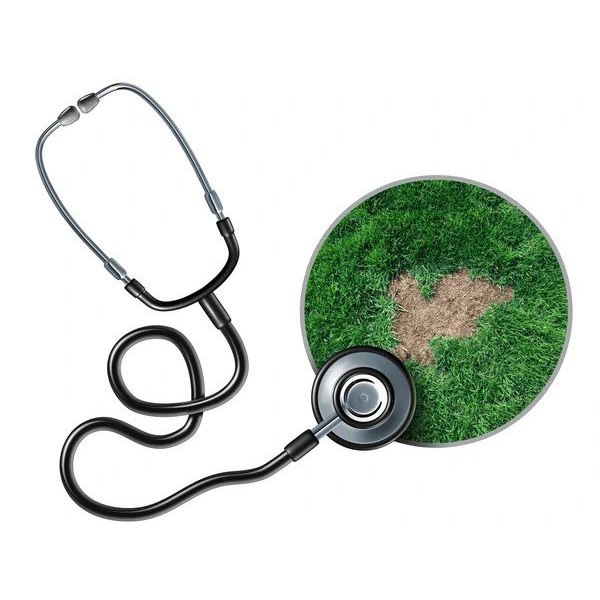
Tall Fescue lawns require active management of both fungal diseases and damaging insects, whether through Dreamlawns or a DIY approach. Our warm, humid summers create ideal conditions for disease, and fescue cannot recover on its own once damage occurs.
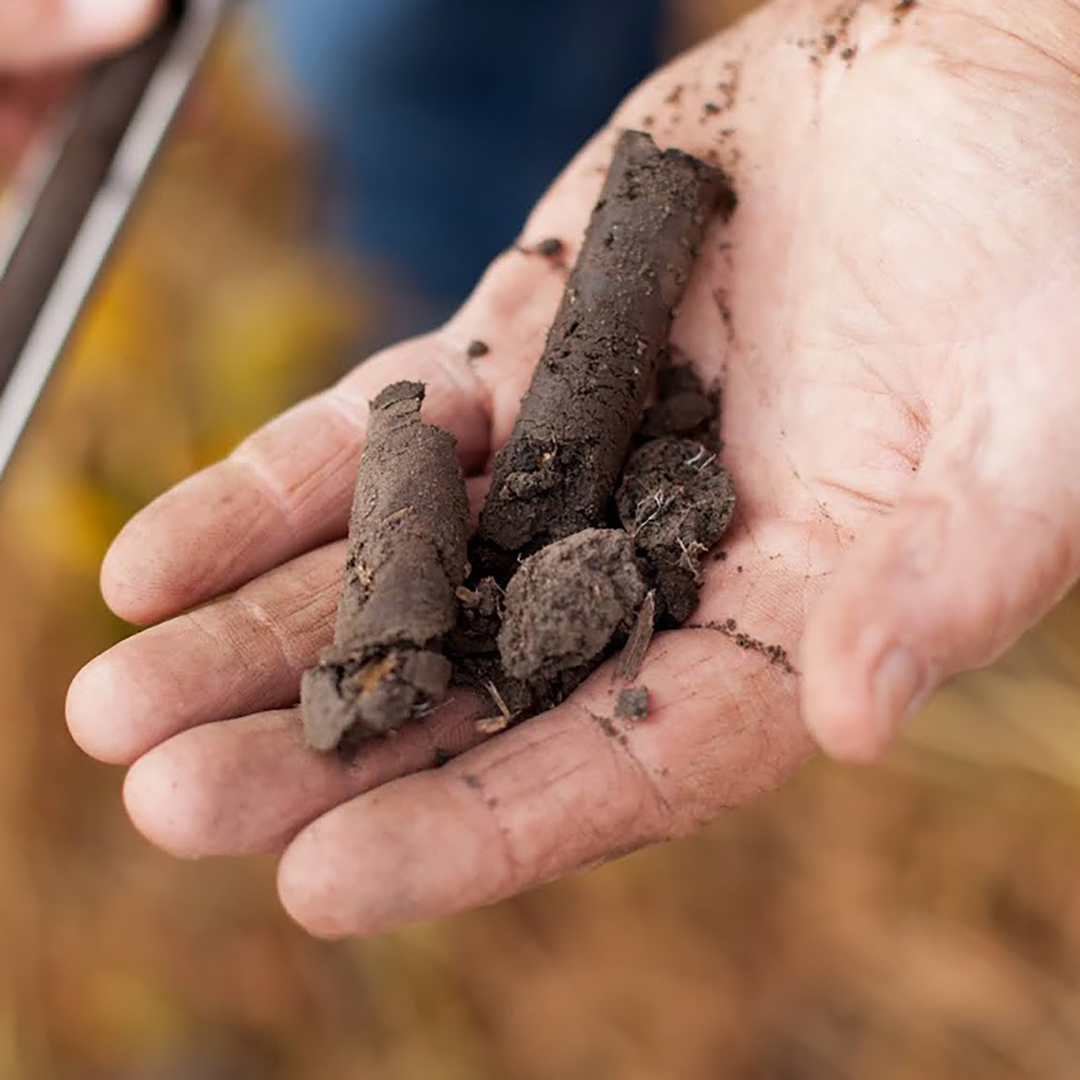
Turf grown in poor soil may struggle with nutrient deficiency, poor seed germination, and increased response to stressors such as heat.
Fescue is especially vulnerable to these issues given its inability to expand (and resulting dependence on seed), vulnerability to heat stress, and high nutritional needs.
Dreamlawns requires a soil test for all fertilizer customers. Based on the results of this test, we may recommend applications of products such as calcium, gypsum, sulfur, potassium, or organic compost.
We will share the soil test report and any recommendations with you. We can also create a custom DIY plan if you’re interested in completing these applications yourself.
